
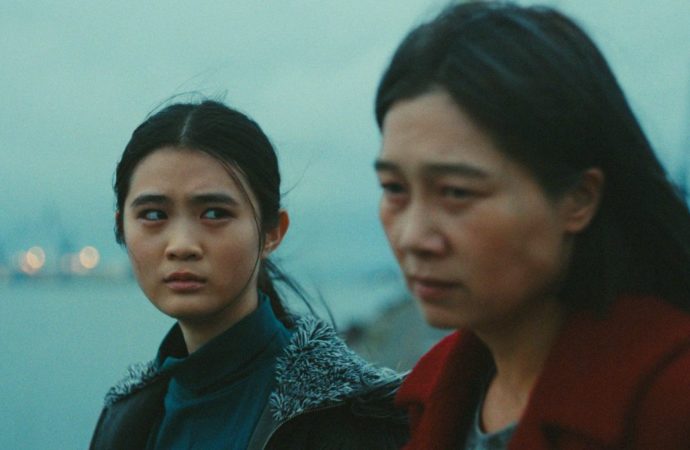

German-Vietnamese filmmaker Alison Kuhn presented The Matriarch at the Tallinn Black Nights Film Festival, a disturbing family drama that combines the tension of a crime thriller with a coming-of-age story. Set within Germany’s Vietnamese community, the film explores intergenerational conflict, cultural identity and the contradictions of maternal love.
The need for parental approval can shape an adolescent’s identity and moral choices. In The Matriarch, Alison Kuhn explores this vulnerability through the story of a young woman whose desire to earn her mother’s affection gradually draws her into a criminal world.
The Matriarch addresses an aspect of migration rarely explored in European cinema: human trafficking within Asian migration networks. Rather than adopting the perspective of investigators or trafficking victims, Kuhn takes us inside a family whose economic survival and emotional bonds are deeply intertwined with criminal activity.
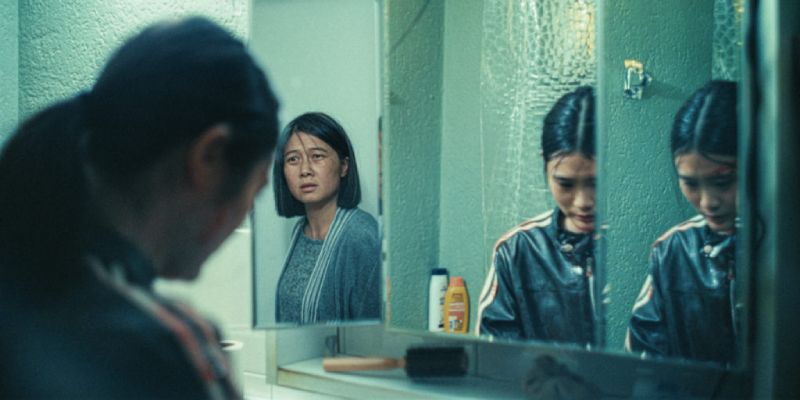
Photo: © Jan Mayntz
The Matriarch is presented as the first German feature film with an entirely Vietnamese principal cast, a significant milestone for representation within the German film industry. Alongside Lissy-Marie Nguyen, the cast includes Tuyen Do, Viet Pham, Trang Le Hong, Marlon Minh-Hai Leyck, Viet Long Hoang, Yung Ngo and Long Dang-Ngoc.
A Daughter Seeking Her Mother’s Approval
Seventeen-year-old Kim lives with her mother — who runs a human trafficking operation bringing people from Asia to Europe — and her younger brother in a modest apartment near Germany’s Baltic coast. Strangers regularly pass through the family home, using the apartment as a temporary stopover and hiding place on their journey to Europe.
For Kim, this clandestine activity has become a normal part of everyday life, while her brother has developed traumatic mutism in response to their disturbing environment. The young woman’s main concern is not questioning her mother’s business but earning her affection and approval.
When the matriarch’s most trusted associate leaves the organisation to establish a rival operation, just as she falls seriously ill, Kim gradually takes on greater responsibilities. For the first time, she feels needed and valued by a woman whose emotional distance had always seemed impossible to overcome.

Photo: © Jan Mayntz
As Kim discovers the brutality underlying the family business, she begins to cross her own moral boundaries. Her adolescent experiences, including the awakening of desire and her first romantic relationships, are pushed aside by the urgency of proving herself worthy of her mother’s approval.
Lissy-Marie Nguyen delivers a remarkable performance as Kim, conveying the emotional complexity of a teenager caught between the need to be loved and the discovery of a reality that threatens her innocence. Her performance provides much of the film’s emotional intensity, particularly towards the end, when admiration and obedience begin to give way to confusion and resistance.
Growing Up Between Two Cultures
Migration is central to understanding the conflict at the heart of The Matriarch. Kim belongs to a generation raised in Germany, exposed to ideas of individual autonomy, emotional expression and family relationships that do not always align with those prevailing in her home.
Her mother, by contrast, embodies a conception of family responsibility rooted in traditional values of sacrifice, discipline and the obligation to ensure collective well-being. Kuhn, however, avoids reducing these differences to a simplistic opposition between traditional and modern cultures.
This cultural disconnection finds another expression in Kim’s younger brother. His silence does not prevent him from performing well academically, but suggests a profound emotional withdrawal from his surroundings. His mutism can be interpreted as a response to family tensions he is unable to process, or as a manifestation of the difficulty of living between two cultural worlds.

Photo: © Jan Mayntz
Motherhood, Authority and Sacrifice
In The Matriarch, Kuhn explores a form of motherhood in which love is expressed through discipline and sacrifice. Beyond the biological bond between mother and child, a matriarch is defined by her authority and leadership within a community. It is no coincidence that Kuhn cites a Vietnamese proverb: “If you hate your child, give them sweets. If you love your child, give them the rod.” It is with this severity that the matriarch runs both her family and her business, exercising authority far beyond the domestic sphere.
The director portrays a matriarch assuming a role traditionally reserved for men in the criminal underworld and society at large, while also revealing how she remains bound by obligations that constrain and ultimately destroy her. Kuhn never romanticises the exercise of power by a woman, nor does she resort to the increasingly widespread justification of female rage.
From Social Drama to Crime Thriller
Kuhn’s decision to embrace the thriller genre emerged directly from her research. Although she had long wanted to explore her cultural roots, she only found the right approach after interviewing members of the community, investigative journalists and officers from Germany’s Federal Police.
The genre allowed her to construct a fictional narrative accessible to a broader audience. The criminal plot does more than generate suspense: above all, it serves as the catalyst for Kim’s psychological transformation. Every new responsibility brings her closer to her mother, while forcing her to confront situations that undermine her own values.




Nadie ha publicado ningún comentario aún. ¡Se tú la primera persona!