
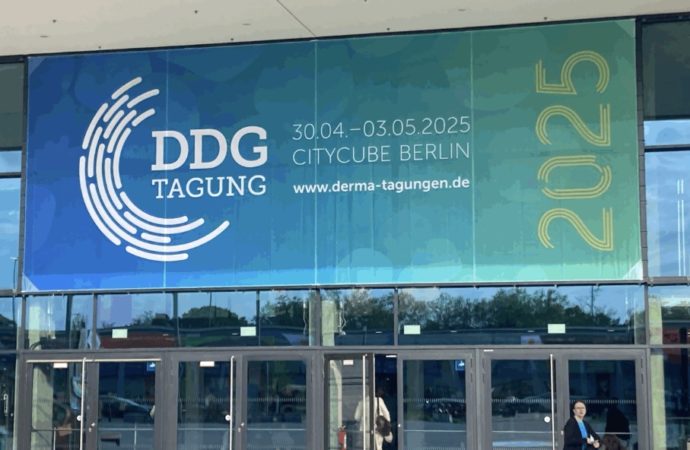
The 53rd meeting of the German Dermatological Society brought together more than 4,700 professionals at the CityCube Berlin. New therapies, artificial intelligence, sustainability and an increasingly personalised approach to skin diseases shaped four days of intense scientific activity.
For four days, Berlin once again became the centre of German-speaking dermatology. The 53rd meeting of the Deutsche Dermatologische Gesellschaft (DDG), held from 30 April to 3 May at the CityCube Berlin, brought together more than 4,700 specialists, researchers and healthcare professionals. With almost 200 sessions encompassing plenary lectures, symposia, courses, scientific presentations and poster tours, the conference offered an extensive overview of a specialty undergoing rapid transformation.
Attending a meeting of this scale makes it possible to observe something that is not always so apparent in everyday clinical practice: dermatology can no longer be understood solely as a discipline devoted to recognising and treating visible lesions. It is also immunology, oncology, genetics, surgery, infectious diseases, precision medicine and technology. That diversity was one of the meeting’s clearest features.
From Treating Symptoms to Modifying Disease
One of the themes running throughout the conference was the expansion of targeted therapies. In chronic inflammatory diseases such as atopic dermatitis, psoriasis, hidradenitis suppurativa and chronic prurigo, increasingly precise knowledge of the immunological pathways involved is changing therapeutic goals.
Biologics and small molecules allow selective targeting of specific cytokines or signalling pathways. This evolution does not simply mean having more drugs available. It also requires deciding which treatment is most appropriate for each patient, how to measure response rigorously, and how to maintain long-term disease control without losing sight of safety.
The discussions revealed a dermatology increasingly less reliant on uniform algorithms and more oriented towards clinical stratification: phenotype, comorbidities, age, patient preferences and previous treatments all become part of a shared decision-making process. The question is no longer simply whether an effective therapy exists, but for whom, at what point and with what objective.
© Aleix de Vargas-Machuca /EL HYPE
Artificial Intelligence: Between Promise and Responsibility
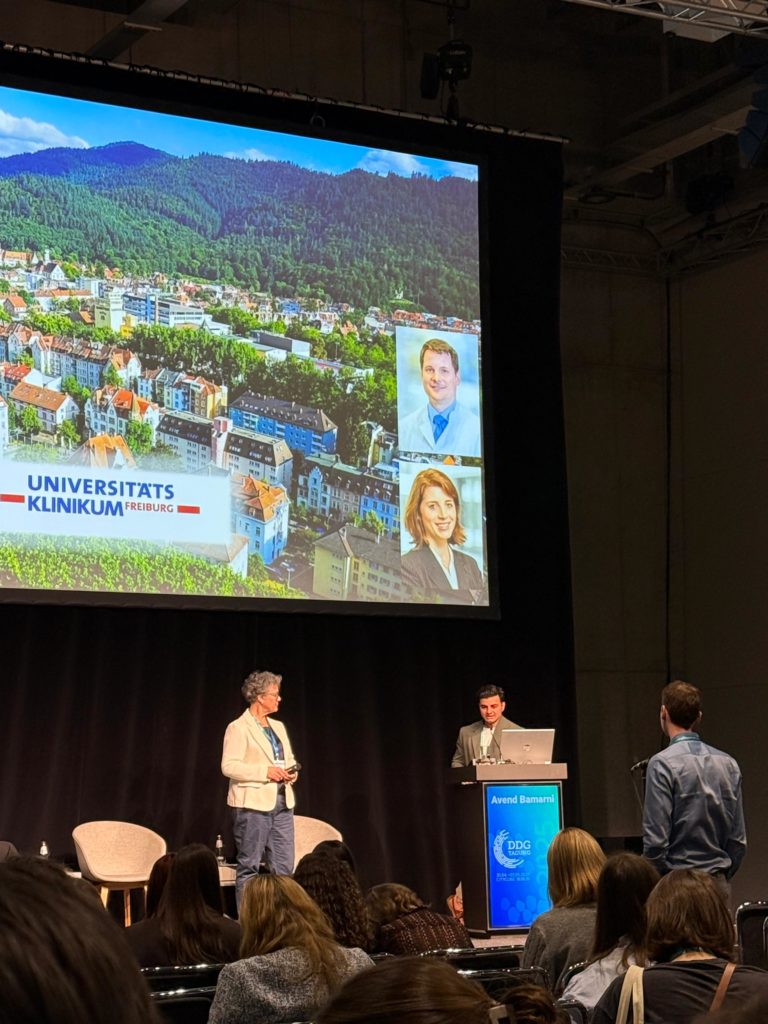
Digitalisation and artificial intelligence also occupied a prominent place. Dermatology is particularly well suited to the development of image-analysis systems: a large part of diagnosis relies on morphological patterns, clinical photographs, dermoscopy and histopathology.
The potential applications are numerous: assisting in the recognition of suspicious lesions, objectively documenting disease progression, quantifying severity or facilitating remote follow-up. But technological enthusiasm was accompanied by inevitable questions. The quality of these systems depends on the data on which they have been trained; an insufficiently representative image dataset may produce less reliable results for certain skin tones, age groups or rare diseases.
Artificial intelligence can extend the specialist’s capabilities, but it cannot replace clinical context or medical responsibility. Its useful integration will require independent validation, data protection and sensible incorporation into patient care, rather than adding further layers of complexity to consultations already operating under considerable time pressure.
© Aleix de Vargas-Machuca /EL HYPE
Skin Cancer and the Value of Anticipation
Dermato-oncology once again occupied a central place. Innovation in immunotherapy and targeted treatments has substantially changed the prognosis of several advanced skin cancers, particularly melanoma. At the same time, the rising incidence of skin cancer is a reminder that therapeutic advances do not diminish the importance of prevention or early diagnosis.
Cumulative exposure to ultraviolet radiation, demographic changes and an ageing population are creating a growing burden on healthcare services. In this context, dermoscopy, surveillance of high-risk patients and health education remain essential tools. Even the best technology has limited value if suspicious lesions reach the clinic too late or if access to dermatological care is inadequate.
Rare Diseases: Measuring Better to Treat Better
Rare and inherited skin diseases were also represented in the scientific programme. Research in these patients faces particular challenges: small cohorts, considerable clinical heterogeneity and manifestations that evolve over many years.
Alongside the development of therapies, it is essential to describe the natural history of each disease accurately and to define variables capable of reflecting clinically meaningful changes. Standardised medical photography, functional scales and patient-reported outcomes can provide a more comprehensive picture than a single examination at one point in time.
This approach is particularly important in genodermatoses, where a molecular alteration can result in very different clinical trajectories. Connecting genotype, clinical manifestations and functional progression will provide one of the foundations for designing more useful studies and properly evaluating new interventions.
Sustainability and the Reality of Healthcare
The future of the specialty does not depend solely on pharmaceutical innovation. The environmental sustainability of healthcare, staff shortages and the organisation of the healthcare system emerged as issues inseparable from contemporary medicine.
Dermatology uses disposable materials, consumes energy and generates frequent travel for patients with chronic diseases. Teledermatology can avoid some unnecessary in-person consultations, but not all of them; digital care should be used where it provides genuine value rather than as an automatic substitute for physical examination.
The need to translate research into viable clinical practice was also clear. A treatment may be scientifically promising yet encounter barriers in funding, availability or implementation. True innovation does not end when a drug is approved or an algorithm published: it ends when it measurably improves a patient’s life.
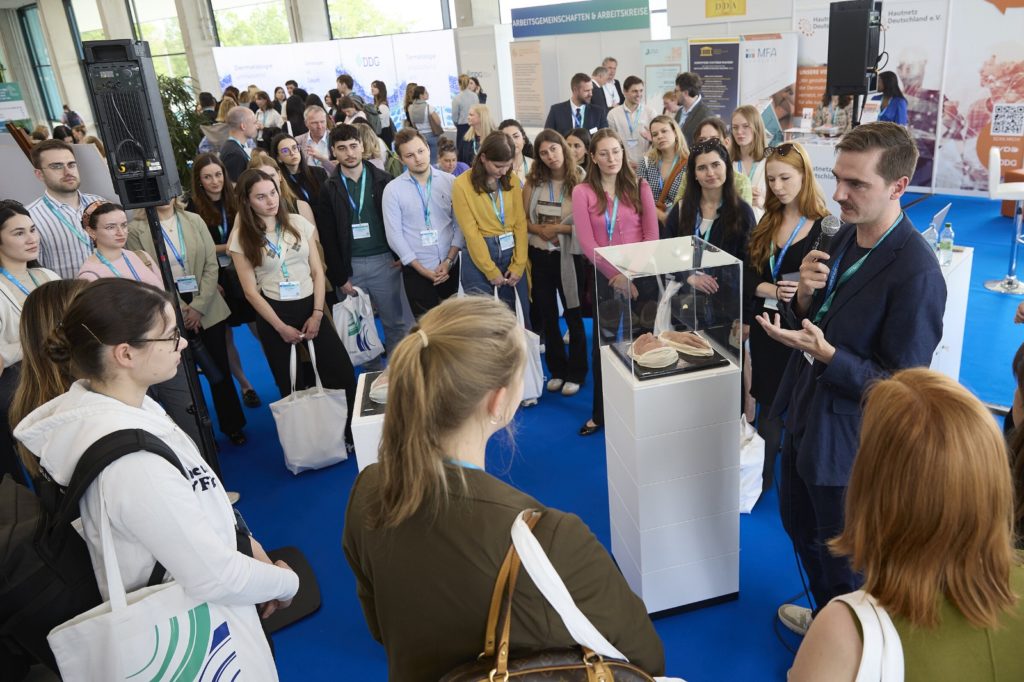
© DDG Mike Auerbach
A Conference Is Also a Conversation
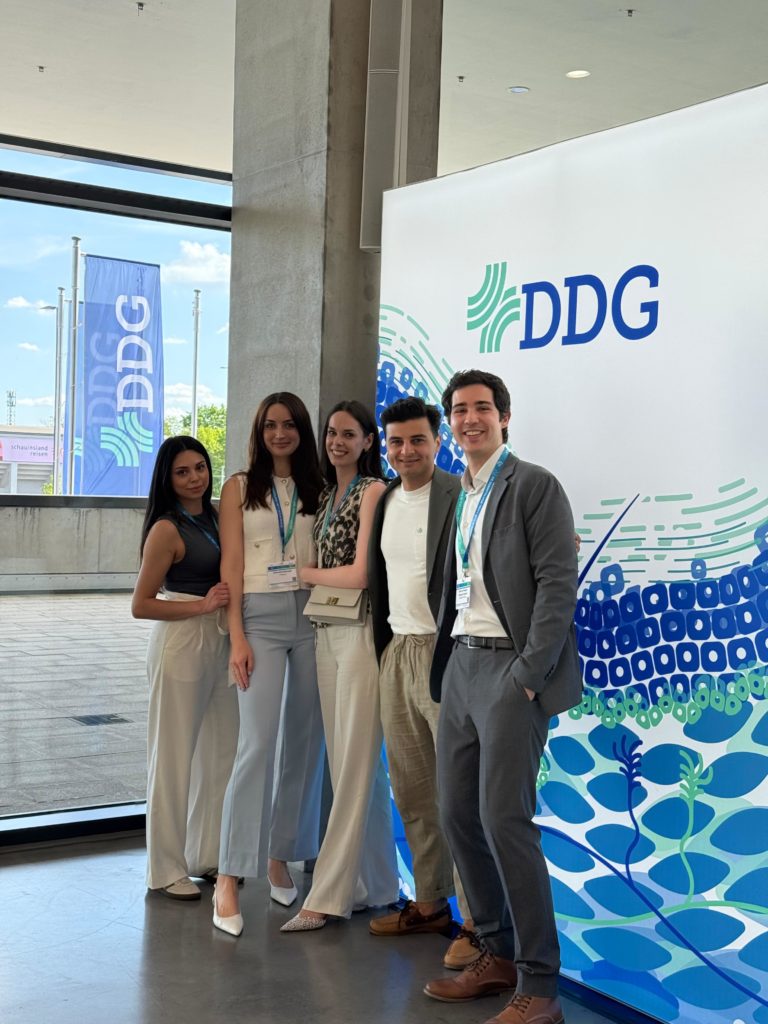
Beyond the official programme, a meeting such as the DDG Conference is also built on the encounters that take place between sessions: conversations with colleagues from other centres, discussions of complex cases, projects that begin around a poster and questions that continue long after a lecture has ended.
The 2025 edition revealed a scientifically vigorous specialty, but also one conscious of its challenges. Therapies are becoming increasingly specific, diagnostic tools more sophisticated and the amount of available data far greater. The challenge is to turn that complexity into clinical decisions that are more precise, accessible and humane.
Leaving the CityCube, one impression is clear: the future of dermatology will not be defined by a single technology or discovery. It will emerge from the convergence of basic research, clinical experience, patient participation and collaboration between centres. For four days, Berlin offered a compelling glimpse of that future, while also reminding us of the work still required to make it a reality.


Nadie ha publicado ningún comentario aún. ¡Se tú la primera persona!