

Our second report from the 59th Sitges International Fantastic Film Festival of Catalonia, an edition that will be remembered not only for the controversies that preceded it, but also for the numerous organisational blunders that have made covering the festival considerably more difficult than usual for journalists. Nor is this likely to be an edition particularly remembered for the quality of the films in the Official Competition. In fact, we have to turn to Sitges Collection, a non-competitive section showcasing films the festival considers noteworthy for one reason or another, to find one of the best offerings of Sitges 2026.
That film is 5 minutos más, Javier Ruiz Caldera’s latest venture into fantastic cinema, a genre in which he has worked throughout almost his entire career, from his uproarious debut Spanish Movie to little gems such as Promoción fantasma and thoroughly respectable productions like Malnazidos, which opened the 2020 Sitges Film Festival. Caldera is perhaps the closest thing we have to that notion of the craftsman director we so often invoke when discussing the generation of genre filmmakers who, in the late 1970s and especially throughout the 1980s, shaped the cinematic education of an entire generation. Like Joe Dante or Richard Donner, to name just two, Caldera is a director accustomed to bringing other people’s screenplays to life, something that apparently presents no conflict with his sense of authorship, and to turning that material into genuine box-office hits.
The screenplay for 5 minutos más is by none other than Berto Romero, who proves that, besides being a tremendously funny comedian, he is also an inventive storyteller capable of constructing solid narratives that go well beyond the individual gag or a mere succession of them. The film presents us with a temporal paradox, hardly an original premise in itself: its three protagonists suddenly find themselves trapped in a time loop that returns them to exactly where they were every five minutes.
These paths — and herein lies perhaps the film’s greatest strength — move with an often unexpected sense of unease between almost slapstick comedy (the scene in which the neighbour has both knees broken) and uncompromising drama (everything involving the little girl who is run over, a storyline handled without the slightest hint of humour). I find it wonderful that a commercial film like this should dare to unsettle its audience — and succeed. It is a boldness that undoubtedly enriches the film enormously.
In this respect, we should not expect 5 minutos más to offer a definitive resolution that answers every question it raises. There is a passing mention, although it is merely incidental to the plot, that the time loop is occurring elsewhere in the world. Perhaps throughout the entire world. It hardly matters. The aim here is simply to play a little with the concept introduced at the outset, without elaborate constructions or grander ambitions.
Almost the entire film takes place in a single location, scarcely any characters appear beyond the original three, and the story never escalates to the point of requiring large-scale technical set pieces. Ultimately, this only serves to highlight Romero’s undeniable intelligence as a screenwriter and, importantly, Caldera’s skill as a director. A filmmaker, incidentally, who once again demonstrates not only an exquisite command of the mechanics of comedy, but also his remarkable ability to direct actresses. Just as he did with Inma Cuesta in 3 bodas de más, here he draws a magnificent, powerhouse performance from Belén Cuesta, whose acting ultimately shapes every emotional register the film moves through. From comedy to horror and then drama, it is her facial expressiveness and extraordinarily controlled delivery that carry the audience from one emotional state to another entirely different one.
Unfortunately, Hope, the latest film from South Korean director Na Hong-jin, starring Michael Fassbender and Alicia Vikander — working together for the second time — leaves nothing like the same impression. It was one of the most eagerly anticipated films of this year’s Sitges Film Festival. Its intriguing opening certainly deserves credit: keeping everything off-screen, the film gradually reveals the devastating effects of something — we do not yet know exactly what — that has struck a small Korean town. It is a strategy reminiscent of Steven Spielberg at his best, or, for instance, Roland Emmerich‘s excellent Godzilla: a technique that consists of showing the consequences of a disaster before revealing its cause, thereby heightening the audience’s anxiety. What, or who, has brought such destruction and chaos to this small town?
Before long, we find ourselves caught up in a chase, once it becomes clear that some kind of monster is on the attack. And it is not long before the film begins to reveal one of its major problems: this entire opening sequence drags on for an interminable 47 minutes. Yes, 47 minutes in which everything boils down to a man running through the town, firing shots off-screen and looking terrified. Nothing else is introduced, developed, explained or even hinted at. Nothing. Just that.
This is the first clear indication of Hope‘s narrative ineptitude: it is difficult to engage with a film that offers little more than off-screen gunfire for 47 minutes. And, indeed, for all its subsequent spectacle, it remains incapable of providing anything for the overwhelmed viewer to latch on to. The noise is exhausting, the action relentless, the music deafening, and yet the entire narrative feels stretched and strained to breaking point without any convincing justification in the plot. The result is an exhausting, unbearable ordeal lasting 161 minutes.
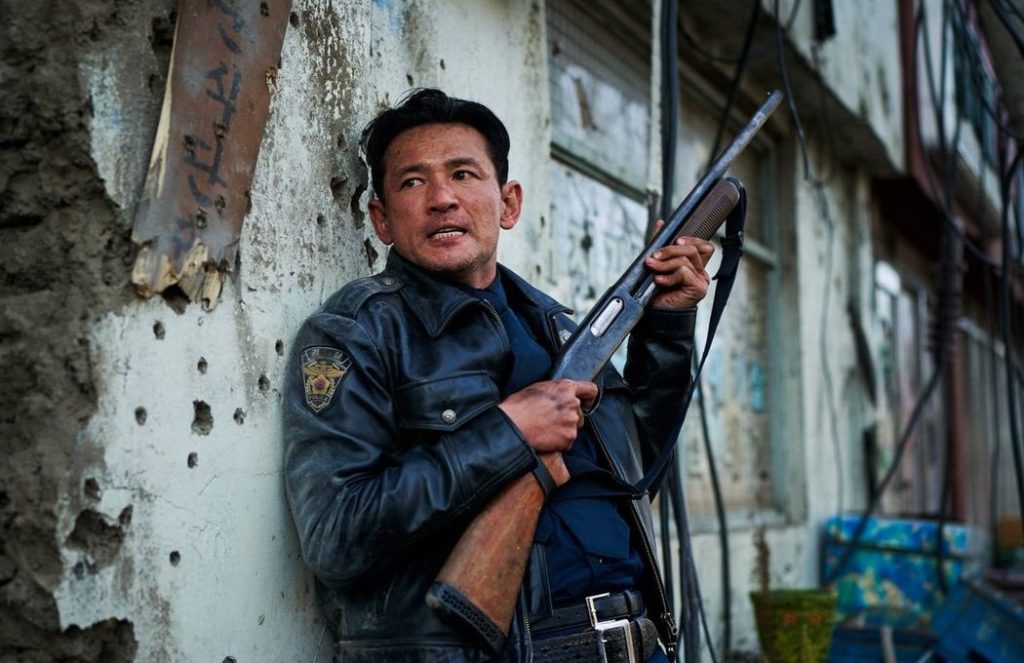
And this is a serious problem when you are making a monster movie. Because it undermines the entire narrative and repeatedly pulls you out of the film: when the eye registers such a blatant lack of physical mass, the mind — mine, at least — struggles to grant the suspension of disbelief that this kind of cinema particularly demands. It is not a question of believing that such a monster could exist in real life, but of believing that it could exist within the world of this film. And that is a task at which Hope fails miserably.
Burdened by these two serious shortcomings, Hope stumbles along through sequences of absurd, unnecessary dialogue before launching into an interminable motorway chase in which, without giving too much away, the monsters’ designs are no longer as original as in their first appearance. By this point, we are dealing with something considerably more predictable and dull. All of which leads to a bewildering ending, almost an afterthought awkwardly tacked on, steeped in an unmistakable narrative and visual debt to James Cameron’s dreadful Avatar.
Ultimately, Hope emerges as one of the season’s major disappointments, its reputation perhaps artificially inflated by its appearances at festivals such as Cannes and San Sebastián. This is only Na Hong-jin’s fourth feature film, yet it was being talked about as a phenomenon of epic proportions. Perhaps it is time to start acknowledging that many film festivals today exist in a bubble, utterly disconnected from ordinary cinema audiences, frequently manufacturing reputations that prove to have little staying power once the films reach theatres — if they ever do.
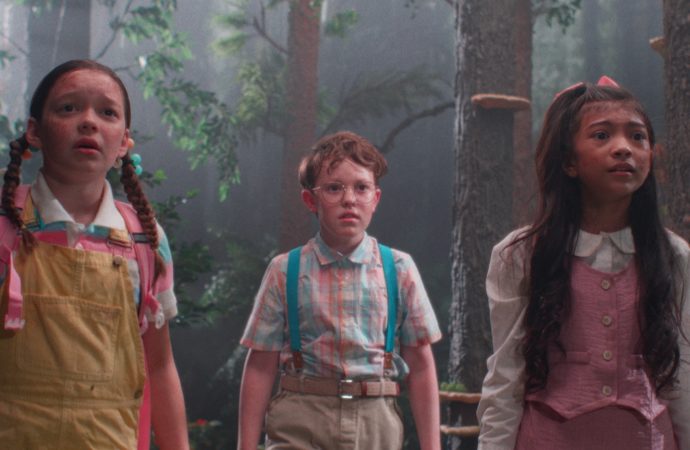
I don’t know whether that will be the case with Buddy, directed by Casper Kelly and screened in the Official Competition at Sitges. Destined to become an instant cult classic by the very nature of its premise, Buddy opens in bewildering fashion, resembling a typical children’s television programme of the kind so prevalent in the 1990s: a square aspect ratio, the visual texture of television, and a multicoloured set filled with animated objects such as a letterbox, a well and a sofa. A group of children inhabit this world, summoning the titular Buddy, a friendly orange unicorn who plays with them and teaches them valuable life lessons, such as the importance of being afraid or keeping the house clean.
The first episode ends, complete with credits, and the next one begins. And this is where we start to realise that something is not quite right with Buddy, who behaves strangely towards one of the children. The cycle of television episodes repeats a few more times, and things soon spiral wildly out of control, revealing Buddy to be a full-blown psychopath, perfectly capable of doing whatever it takes to preserve the peace and harmony of the idyllic, picture-perfect childhood world depicted in the programme.
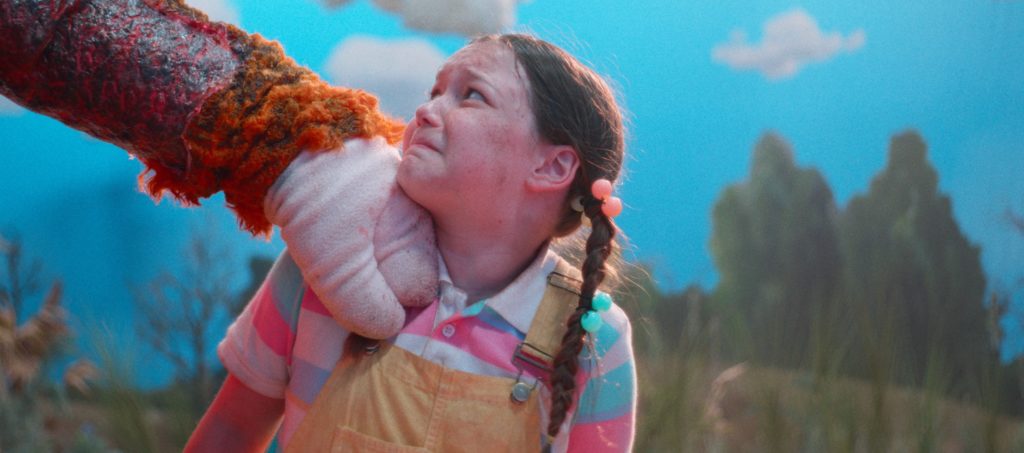
The layers of interpretation offered by a premise as outrageous as this are as numerous as they are fascinating. For instance, the film exposes the childishness of those old children’s television programmes and questions their value: an entire generation grew up shielded from a reality capable of harbouring unspeakable monsters, and the film asks to what extent this was an appropriate way of teaching children values.
Beyond the inspired absurdity of turning a children’s mascot into a child-murdering serial killer, the final stretch of Buddy also conceals a furious critique of the absolute dominance of screens over the imagination. Ultimately, Buddy barely has to make an effort to lure his victims, because he knows that, nowadays, a screen can override children’s free will — and he exploits that knowledge. It is a message well worth discussing and exploring once the screening is over.

Nadie ha publicado ningún comentario aún. ¡Se tú la primera persona!