
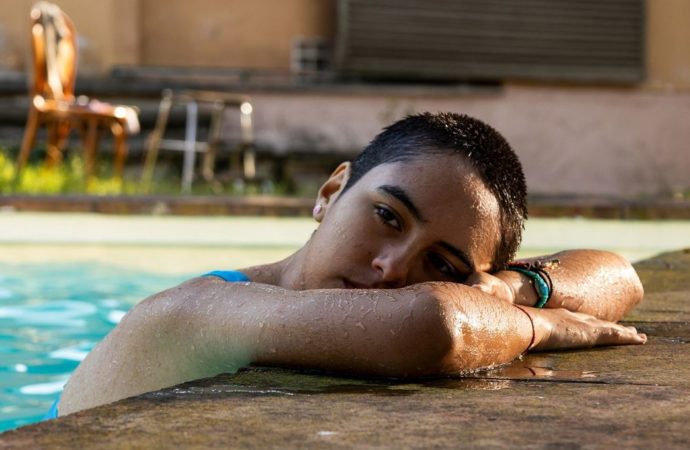
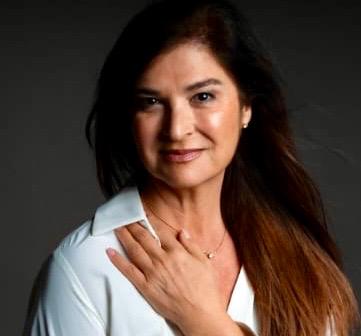
The genesis of The Good Daughter could hardly have been more auspicious. The film, directed by Júlia de Paz and co-written with Núria Dunjó, both graduates of ESCAC (Escola de Cinema i Audiovisuals de Catalunya), originated in the short film Harta (2021), also by the director, which won a Gaudí Award and three Silver Biznagas at the Málaga Film Festival. The story of Carmela—initially portrayed by Anna Caponnetto—went on to triumph at the Tallinn Black Nights Film Festival, where its lead actress, Kiara Arancibia, received the award for Best Actress, alongside Best Film and the Audience Award.
With this trajectory behind it, the latest film by the co-creator of the outstanding series Querer arrives, sharing at its core a necessary engagement with the less visible dimensions of gender-based violence. Abuse has layers as hidden as they are painful, and the effort to make all its consequences visible is increasingly finding its way into cinema. Since Take My Eyes (Icíar Bollaín, 2003) shattered the walls of domestic intimacy to expose with striking realism the reality that far too many women still endure, filmmakers have adopted a range of perspectives to address the issue through artistic expression. In The Good Daughter, Júlia de Paz presents, with a minimalist, observational, and profoundly respectful —therefore effective— style, the impact of gender-based violence on family dynamics, on its members, and in this case, most notably, on the emotional development of an adolescent.
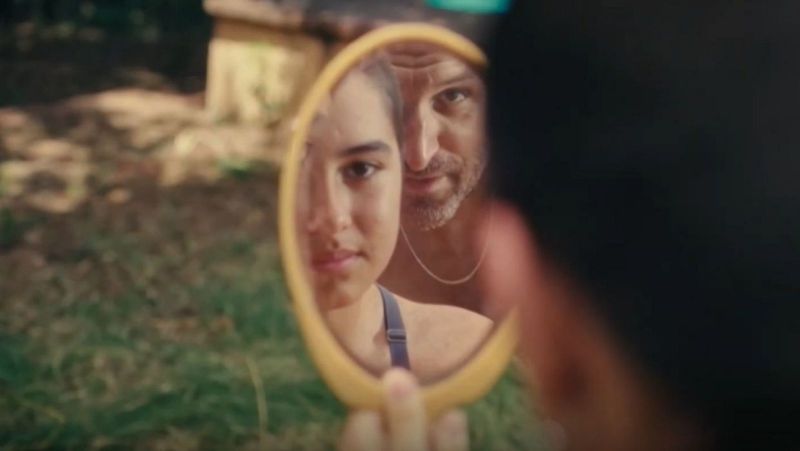
The focus chosen by the screenwriters is clear and deliberate: to depict how gender-based violence within a family reshapes the life of a young girl at the very moment when her adult identity begins to take form, and how a manipulative abuser —played here by Julián Villagrán— exploits a naïve attachment that functions as a genuine survival mechanism for his daughter.
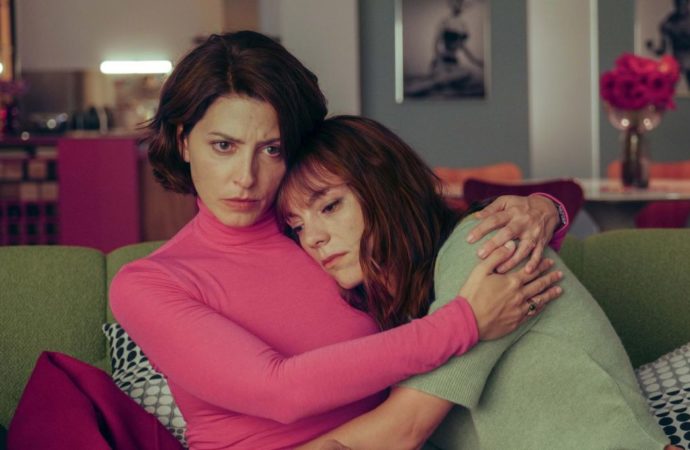
The Good Daughter moves through highly charged emotional spaces: the shattered home (stained in red) as a witness to violence; the grandmother’s house as a refuge; the school as a safe environment for connection; the new home shared by mother and daughter as a space to begin again —once the initial clash over divided loyalties has been overcome; and, above all, the coldness of the visitation center and the father’s ambivalent home, symbolized by the swimming pool scenes, shifting from joy to fear. Emotions evolve through space, reflected and refracted in each setting.
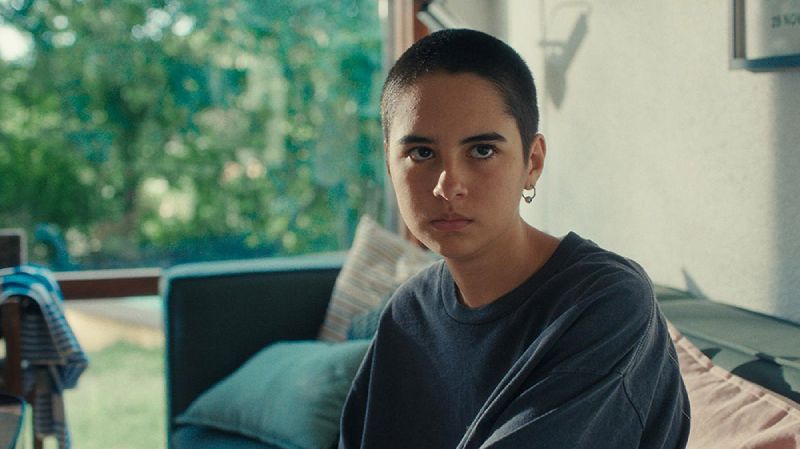
Carmela wants to love, she wants to have a father she can love and believe in, because the security of learned affections offers her a sense of grounding in a world that has otherwise fallen apart. Yet the maturity that begins to take hold will lead her into that territory where the shades of grey hurt, until one learns to distinguish them. There is a point of contact here with Julie Keeps Quiet (Leonardo Van Dijl, 2024), premiered in the Semaine de la Critique at the 77th Cannes Film Festival: the story of a teenager who chooses not to accuse her coach, despite allegations of sexual abuse. Silence, the refusal to act against the perpetrator, become visceral strategies for confronting trauma or truth—approaches that Júlia de Paz renders through the clarity of a child’s gaze and the confusion of adolescence.
Between the need to love and the necessity of doing so with open eyes, The Good Daughter finds its most uncomfortable —and at the same time most lucid— truth. Júlia de Paz captures ambiguity and the painful process of emotional learning, leading to that point where letting go of outdated beliefs becomes a way of understanding what is right.

No one has posted any comments yet. Be the first person!