


When critics and journalists in a packed screening at the Festival de Cannes begin applauding and bursting into laughter while an elderly South Korean man explains his intestinal problems, something is clearly changing at the world capital of auteur cinema.
Ten years after The Wailing, South Korean director Na Hong-jin storms into the official competition with Hope, a film that once again places his singular vision at the service of genre cinema.
The story unfolds in Hope Harbour, a small South Korean town that resembles many others except for one detail: its proximity to the DMZ, the demilitarized zone separating the two Koreas. In this desolate place, permanently on the edge of conflict, barbed-wire fences and weapons are simply part of the landscape.
But this time, the threat does not come from the enemy brothers in the North, but from somewhere much farther away. When an animal is found dead, torn apart by the claws of a strange creature — a giant bear? a North Korean tiger? — the town mobilizes to defend itself.
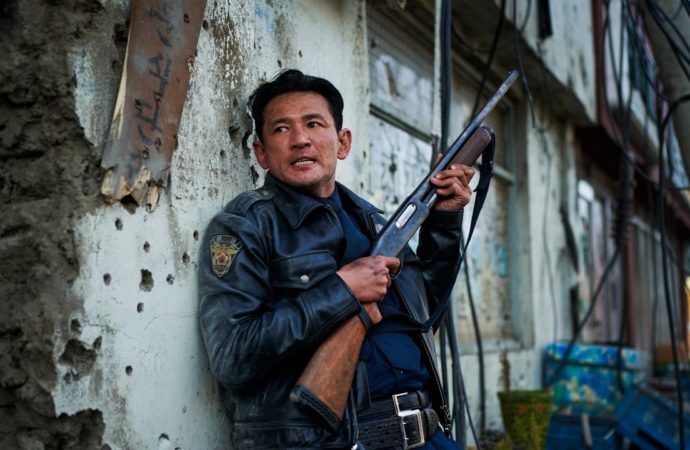
For more than two hours, we follow a dim-witted sheriff (Hwang Jung-min) and his fearless deputy (Jung Ho-yeon, internationally famous since her role in Squid Game) as they attempt to save the town and its inhabitants from an invasion of beings arriving from another galaxy.
Without hiding its intentions, Na embraces a rowdy, broad-stroke style of filmmaking that is nevertheless tremendously effective: a rollercoaster of emotions that drags the audience from laughter to sheer panic without a moment to breathe.
Echoing both John Carpenter and Bong Joon-ho, and powered by the director’s extraordinary talent for staging chaos, the film builds a spiral of violence and humour in which disorder itself becomes the engine of the action.
The director of The Chaser fully embraces the genre-blending so characteristic of South Korean cinema, moving from western to action film to horror, delivering anthology-worthy sequences such as the relentless monster chase involving a police car, which occupies almost the entire first hour of the film.
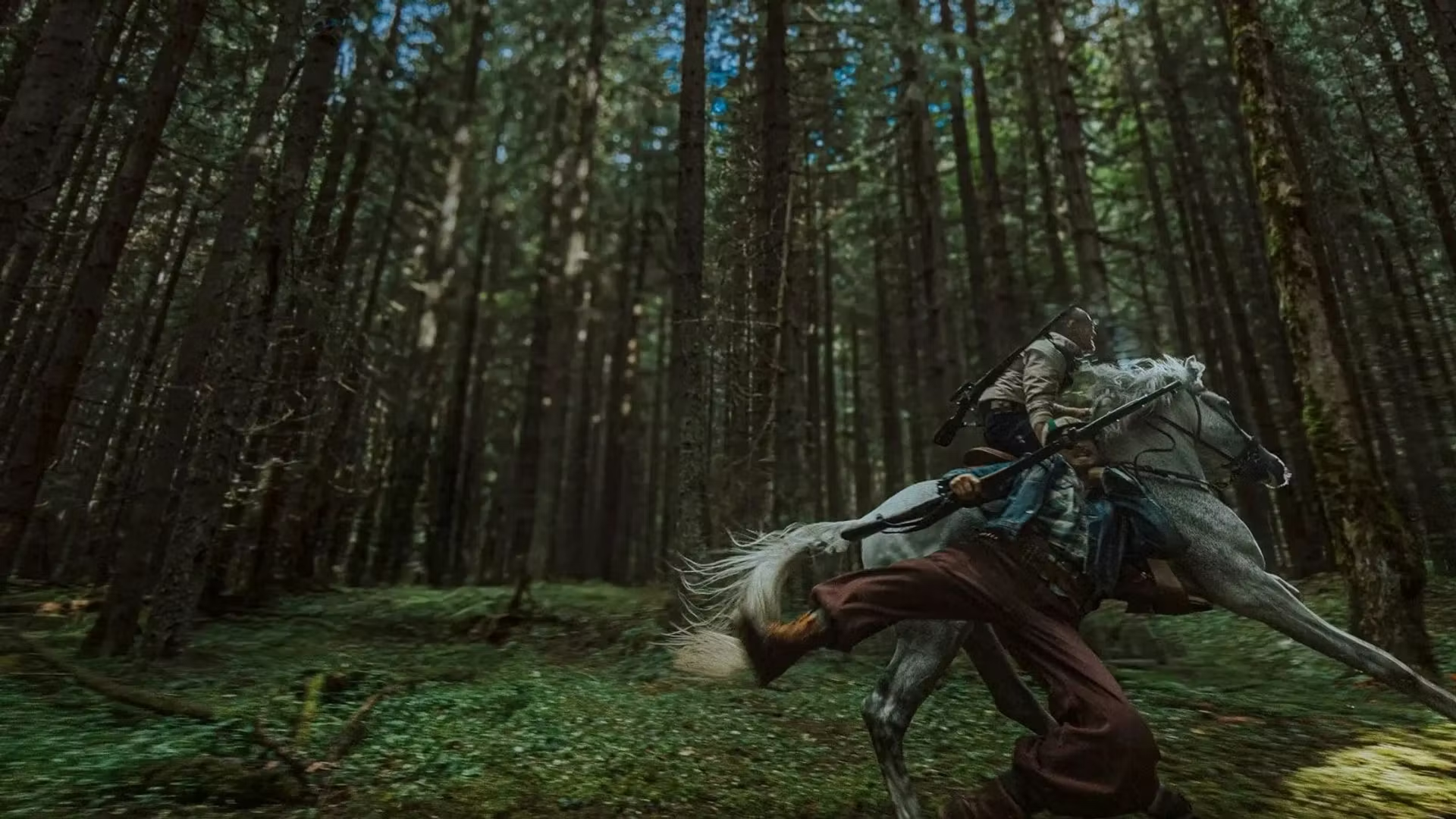
Its characters — from the hunters obsessively pursuing the monster on horseback to the heavily armed elderly men who carry out their duty without asking questions — all react to a world that has become fundamentally incomprehensible.
Much like The Wailing, Hope gradually introduces strangeness and absurdity as the only possible reality, seemingly suggesting that any attempt to control our lives is ultimately doomed to fail.
Despite protests from part of the critical establishment, the inclusion of a Korean blockbuster in the main competition at the Festival de Cannes — even if it is an auteur blockbuster — is good news for the visibility of genre cinema within the world’s major international festivals.
In any case, Hope will leave audiences with unforgettable images, above all those terrifying aliens — half digital, half human — embodied by Michael Fassbender and Alicia Vikander in what may not be the best performances of their careers, but certainly the most unexpected.

Nadie ha publicado ningún comentario aún. ¡Se tú la primera persona!