


Why do we need to screen p*rn? Perhaps because sexuality offers an unusually direct way of exploring our psychology and our attempts to connect despite radically different bodily experiences: genders, ages, shapes, abilities and limitations, preferences, cultural conventions and taboos. And when Nordisk Panorama gathers explicit films from across the Nordic region, another question inevitably presents itself: what might they reveal about Nordic intimate life? Would it prove as cold as the climate?
The P*rn Fest Preview: An Explicit Film Screening, presented by Nordisk Panorama in collaboration with Fennek Film, seemed to promise precisely this kind of exploration. The seven-film programme brought together works from Sweden, Norway, Finland, Iceland and Denmark and was conceived as a foreplay —the organizers’ word, appropriately enough— to a future P*rn Fest in Malmö. Nordisk Panorama framed the programme around a premise that arousal and art are not necessarily opposites.
In Sweden, of all places, putting porn back onto a cinema screen also carries a certain historical resonance.
Nordisk Panorama framed the programme around a premise that arousal and art are not necessarily opposites.
Sweden decriminalized pornography in 1971, becoming the second country in the world to do so, and the liberalization was rapidly reflected in urban culture: sex shops, clubs and cinemas became visible features of Swedish cities. Stockholm acquired its notorious “porn street” around Klara norra kyrkogata, while Malmö developed its own particularly intense pornographic exhibition culture. By the middle of the 70s, however, attitudes and regulation were already changing.
The physical culture surrounding such screenings largely disappeared with time, as the old venues closed, were repurposed, and explicit imagery migrated first towards home video and eventually to the infinite privacy of the internet. Seeing explicit films collectively on a large screen in Malmö in 2026 therefore felt like a historical gesture: bringing something that has become overwhelmingly private back into a public cinematic space.
And Hypnos Theatre was certainly the right kind of space for it.
Situated away from Malmö’s polished multiplex environment, Hypnos is a small microcinema created in a former industrial premises. Its slightly shabby, underground character suited the occasion perfectly. For the Nordisk Panorama evening, the transition from street to screening room was itself part of the performance. Sauna imagery evoked a recognizably Nordic vocabulary, while a man gardening in nothing but rubber boots and gloves established a welcome note of absurdity.
It was a promising start. Unfortunately, the films that followed rarely lived up to it.
If an explicit film is selected for a film festival and projected onto a cinema screen, what distinguishes it from material available on a generic p*rn website?
Across seven shorts, masturbation and self-pleasure returned so insistently that what might initially have seemed intimate gradually became repetitive. The problem was not explicitness but the limited range of cinematic ideas through which it was expressed. For a programme theoretically capable of investigating an enormous spectrum of bodies, relationships, fantasies, identities and cultural attitudes, its imaginative territory felt surprisingly narrow.
The problematics matters particularly because the internet already provides an effectively inexhaustible archive of recorded sexual activity. If an explicit film is selected for a film festival and projected onto a cinema screen, what distinguishes it from material available on a generic p*rn website?
One would hope the answer remains: cinema.
That does not mean explicit filmmaking has to become conventionally “beautiful.” It can be aesthetically sophisticated, certainly, but it can equally be ugly, abrasive, funny, arousing, disturbing, political, educational or deliberately anti-erotic. What it cannot afford to abandon is intentionality: an understanding of framing, rhythm, montage, sound, performance and the relationship between what is shown and why we are being asked to watch it.
One film in the programme demonstrated the possibilities particularly well. The four-minute Swedish short Solidarity With the Garbage Workers on Strike, credited to Lasse Långström & The homosex syndicate of precarious avant-garde artists, combines socialist imagery, gay eroticism and labour politics around a garbage workers’ strike.
Here explicitness actually acquires another function. The film is dynamic, politically legible and, crucially, funny. Humour is a precious quality in erotic cinema precisely because it punctures the self-seriousness that so easily accompanies attempts at transgression. Integrated intelligently, it does not neutralize sexuality; it makes the work sharper.
The contrast with NiXXXavuori: art film, the programme’s 19-minute Finnish contribution by 4 FLOORS OF WHORES, was striking. The work originates in a performance project concerned with shame as an element in the construction of Finnish national identity.
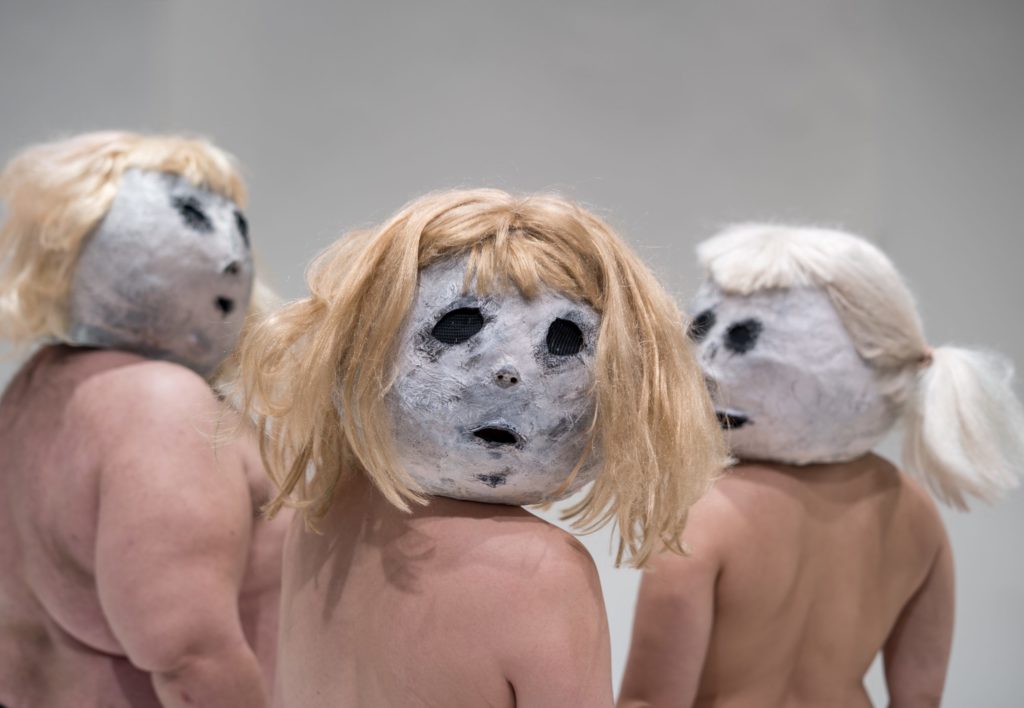
There is potentially fertile territory here; however, filmmakers working with such material would benefit from looking backwards as much as inwards. Cinema has spent decades turning bodily customs and taboo into metaphors for national character —from experimental film and performance art to the ethically dubious provocations of the mondo tradition inaugurated by Gualtiero Jacopetti’s Mondo Cane. The latter made an entire cinematic method out of presenting bodies, rituals and cultural practices as revelations about societies and about humanity itself.
Against that history, NiXXXavuori felt superficial, while its duration magnified rather than complicated the central gesture. Provocation does not automatically deepen through repetition.
Which brings us back to repetition. At some point during the screening, this reviewer fell asleep.
P*rn, like documentary, fiction, animation or experimental film, still needs a cinematic proposition: an idea transformed through image, sound, rhythm and form.
This might ordinarily constitute a professional embarrassment. In this particular case, it inadvertently provided an unusually efficient critical experiment: after waking up, remarkably little appeared to have changed on screen.
Nordisk Panorama and Fennek Film might have been right about the fundamental premise: arousal and art are not incompatible. But proving that proposition requires more than placing explicit material inside a cinema.
If P*rn Fest is to develop into the festival promised by this preview, its most interesting challenge will be not simply to show what conventional cinema does not, but to ask how cinema can show it differently. P*rn, like documentary, fiction, animation or experimental film, still needs a cinematic proposition: an idea transformed through image, sound, rhythm and form.
Otherwise, thewise, there are considerably more convenient resources for watching people have sex than travelling across city to do it on a big screen.



Nadie ha publicado ningún comentario aún. ¡Se tú la primera persona!