
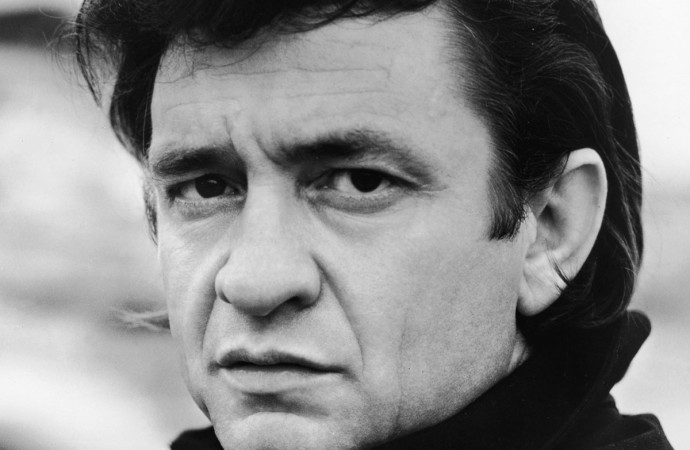

From there, it was only a step to hosting his own television show or appearing on The Muppets. Johnny Cash reinvented country by smearing it with gospel, rock, and whatever else he felt like. His battles with record labels did not prevent a flood of tributes from artists ranging from the most purist to those supposedly farthest removed from his style.
This is how Johnny Cash presented himself: the Man in Black, the rebellious and humble John Ray, a man who wanted to be heard in county prisons. In case one day, as indeed happened, he might have to command respect behind bars…
Humility was etched into his chest from the time he worked the cotton fields of his native Arkansas at barely five years old, despite being white. It was a way of experiencing the misery and hardship that he would later faithfully reflect in his songs. Sorrow also came to him when his brother Jack died while working with an electric saw, after young Johnny had had ominous premonitions about it—an event that would stay with him forever. Although he knew, after listening to Jack Benny’s radio program, that he would devote himself to singing, this mission was not even interrupted during his military career, intercepting enemy Soviet transmissions in Morse code.
Already in the glorious 1950s, he began selling household appliances, doing radio internships, and singing gospel. A genre he wanted to share with Sun Records manager Sam Phillips, convincing him that he could belong on his roster—though not before leaving that legendary session on record alongside a certain Elvis, a blond fellow named Jerry Lee, and a deep-South native called Carl Perkins. However, at the legendary Memphis studio he was always sidelined, so he sought a future elsewhere, where he would not be judged for wanting to experiment with gospel. Close to God yet at odds with His dictates of righteousness, Cash tried every drug there was; he even shared addictions with Waylon Jennings in an apartment, as a way of coping with the endless tours across deep America. Johnny drank everything… yet he remained inspired.
His appearances in prisons became increasingly frequent: at one moment his truck catching fire and causing a blaze, at another trespassing onto private property to steal flowers—not to mention the time he smuggled drugs inside his guitar while crossing the Mexican border. This self-destructive tendency may have stemmed from emotional scars from the past, but the fact is that his music did not suffer for it—quite the opposite—with unforgettable concept albums throughout the 1960s. For a while I was taking the pills, but then the pills started taking me… that was the prevailing tone along a path of excess traced by a man who could be recklessly aggressive one moment and, the next, support charitable causes without a second thought. His heart was untamable: he married June, one of his backing singers, and joined a small Nashville church to atone for his sins. He never fully managed to give up amphetamines, despite vowing to do so when he became a father.
His wife June always encouraged him to keep working and composing… but June passed away, and Johnny did not take long to follow her and become eternal.




No one has posted any comments yet. Be the first person!