

Memory, Ruins and Living Archives
The Thessaloniki International Documentary Festival has long positioned itself as a privileged space for rethinking the documentary form beyond its conventional limits. In its 28th edition (5th-15th March), the Festival sharpens that commitment by awarding honorary Golden Alexanders to two filmmakers whose work radically redefines our relationship to memory, history, and time: the American multimedia artist Bill Morrison and the Greek interdisciplinary filmmaker Vouvoula Skoura. Though their practices differ formally and geographically, both have devoted their careers to interrogating archives—not as static repositories of the past, but as living, unstable, and deeply political terrains.
At a moment when moving images circulate faster than they can be preserved, Thessaloniki proposes a double gesture of recognition and care: honoring two pioneering figures while foregrounding urgent questions about decay, loss, restoration, accessibility, and the ethics of memory in cinema.
Bill Morrison: The Poetry of Decay
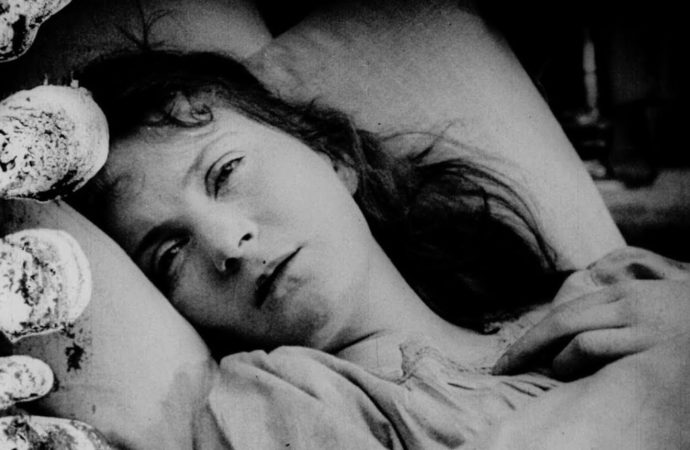
Described by The New York Times as the “poet laureate of lost films,” Bill Morrison has spent decades transforming damaged and discarded footage into some of the most haunting works of contemporary cinema. His films do not simply reuse archival images; they listen to them. Scratches, chemical burns, mold, and disintegration are not treated as defects to be corrected, but as expressive forces—visual equivalents of erosion, forgetting, and historical trauma.
Morrison’s presence at Thessaloniki comes as part of a major spotlight that includes six key works and coincides with the Festival’s broader tribute to archival cinema. He will also deliver a masterclass, Uncovering the Hidden Frame, reflecting on his artistic evolution and on how archival footage has shaped his practice. It is a fitting title for an artist who has consistently revealed what cinema tries to hide: its own mortality.
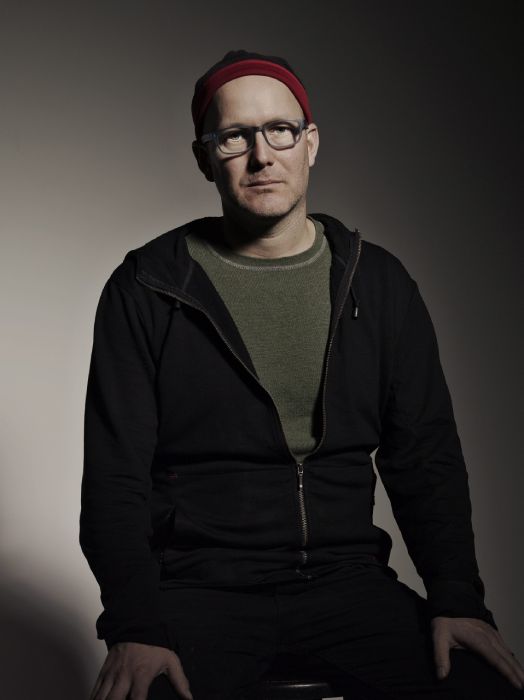
Bill Morrison.
His trajectory is singular. From Decasia—the first film of the 21st century to be included in the U.S. National Film Registry—to Dawson City: Frozen Time, Morrison has built an oeuvre where history resurfaces as fragile sediment. Decasia remains a foundational work: a symphonic meditation composed entirely of decaying nitrate footage, where cinema appears as both ruin and revelation. Kenneth Anger famously called it the most compelling and disturbing thing he had ever seen; Errol Morris went further, declaring it “the greatest film ever made.” Hyperbole aside, the film permanently altered how archival material could be understood aesthetically and philosophically.
Dawson City: Frozen Time expanded this approach into an epic historical investigation. The discovery of over 500 silent-era films buried beneath a swimming pool in the Yukon becomes the starting point for a dense collage of images, photographs, interviews, and documents that chart capitalism, colonialism, boom-and-bust cycles, and the fragile infrastructure of cultural memory. Morrison acts less as a historian than as an archaeologist of moving images, aware that excavation always implies damage.
Among the films screened in Thessaloniki, The Village Detective: A Song Cycle stands out for its unexpected premise: Soviet comedy reels retrieved from the sea near Iceland. Unlike the monumental discovery in Dawson City, this find is incomplete, damaged, and ostensibly minor. Yet Morrison transforms it into a meditation on value, loss, and devotion—mirrored in the life of actor Mikhail Žarov and elevated by David Lang’s elegiac score.
Music has always been central to Morrison’s work. The Great Flood, created with guitarist Bill Frisell, revisits the 1927 Mississippi River flood as both environmental catastrophe and cultural turning point, linking natural disaster to the Great Migration and the transformation of American music. The Miners’ Hymns, scored by Jóhann Jóhannsson, similarly fuses labor history, collective struggle, and musical memory in a requiem for an extinct industry.
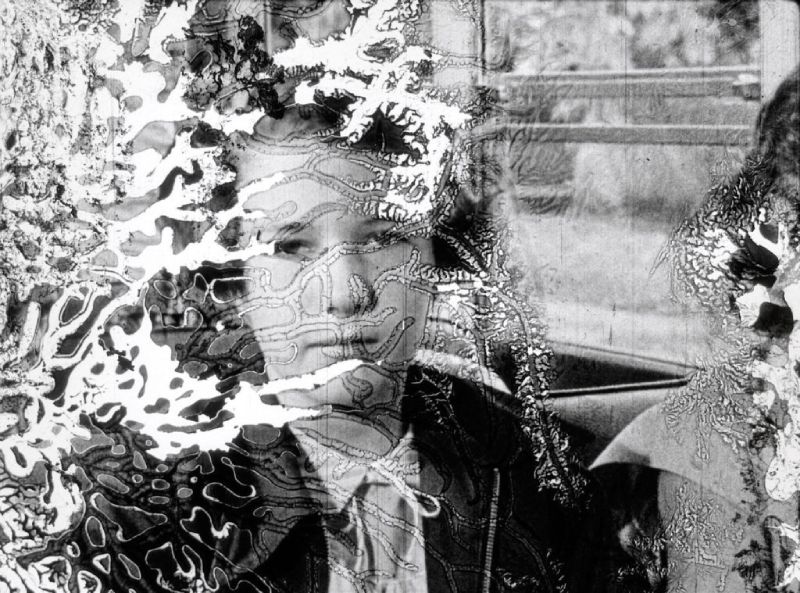
Decasia (Bill Morrison, 2002).
Morrison’s more overtly literary experiments, such as Spark of Being, a found-footage reimagining of Frankenstein, expose a recurring theme: the unstable boundary between creator and creation, archive and present, flesh and image. His most recent short, Incident, nominated for an Academy Award, confronts contemporary violence through surveillance footage, proving that Morrison’s ethics of the archive remain painfully relevant in the digital age.
Vouvoula Skoura: Memory as Inner Migration
If Morrison excavates collective history through decaying film stock, Vouvoula Skoura approaches memory as a fluid, interior movement—what she herself has described as an “inner migration.” The Thessaloniki tribute to Skoura is both expansive and reparative: twenty films spanning four decades, alongside the Festival’s commitment to restore Inner Migration (1984) and Skoria Fotos (1989) in collaboration with the Greek Film Archive.
Born in Thessaloniki and shaped by exile during the Greek dictatorship, Skoura’s work unfolds between visual arts, poetry, essay film, and video installation. Trained in graphic arts and computer graphics, she has consistently rejected linear narration in favor of layered, contemplative structures that mirror the workings of memory itself.
At Thessaloniki, memory is not only commemorated, it is reactivated. And in that reactivation, cinema regains its most urgent function: to make time visible, fragile, and shared.
Her early masterpiece Inner Migration traces a woman’s life across childhood, adolescence, and marriage, intertwining personal memory with national history, civil war, and cultural dislocation. Radical for its time, the film foregrounds the violent rupture experienced by women forced to abandon their environments, while transforming geographical movement into an internal, temporal journey.
In Skoria Fotos, Skoura confronts the Eros–Death dyad through a dense collage of classical imagery, contemporary photography, and computer-processed visuals. References to Morandi, Caravaggio, and López coexist with the destruction of images themselves, as if to suggest that heritage can only survive by being questioned, fragmented, and reworked.
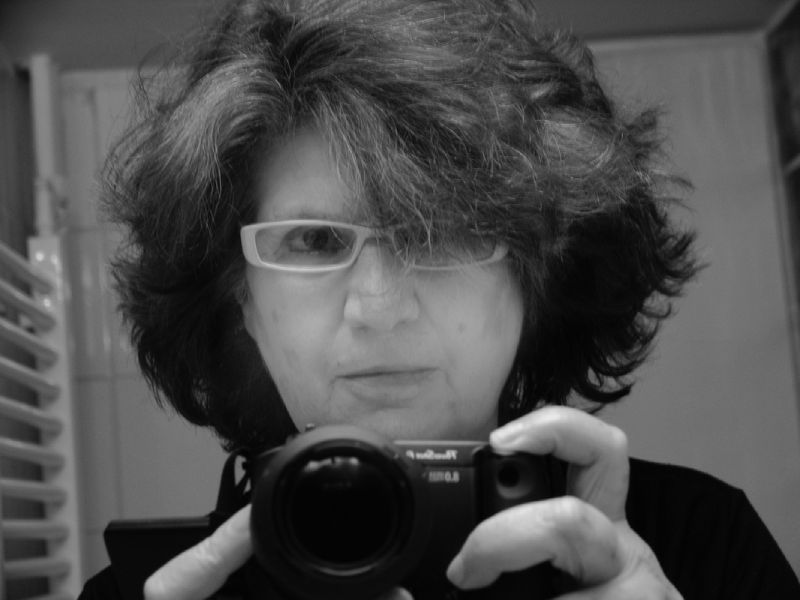
Vouvoula Skoura.
Much of Skoura’s later work is devoted to artists, writers, and poets—Etel Adnan, Giorgos Seferis, Odysseas Elytis, James Joyce—not as monuments, but as voices in exile. Etel Adnan: Words in Exile, awarded at Thessaloniki, constructs a polyphonic portrait of the poet through letters, conversations, landscapes, and languages. Twenty years later, Skoura returns to Adnan in Etel Adnan: Undying Colours (2026), recovering her final reflections in a Lebanon fractured by ongoing violence.
Skoura’s cinema repeatedly returns to myth—Medea, Philoktetes, the Sibyls—not as timeless allegory but as frameworks for thinking about violence, mourning, migration, and the collapse of innocence. Films such as Medea – No Comment (2001) and Sibyls (2002) refuse closure, allowing silence, repetition, and visual fracture to carry meaning.
Her more recent works, including Eveline 2020 (2020) and UTOPIA. The Poetics of Borders: Berlin – Nicosia (2025), confront contemporary displacement head-on. Refugee crises, divided cities, and maritime crossings are inscribed into a cinema where the sea functions as both memory and wound, continuity and rupture.
Archives, Ethics, and the Politics of Care
What unites Bill Morrison and Vouvoula Skoura is not style, but an ethics of attention. Both filmmakers treat images as vulnerable bodies—subject to erosion, censorship, technological obsolescence, and political violence. Their work insists that archives are not neutral. They are shaped by power, by neglect, and by acts of preservation that are never innocent.
By awarding them honorary Golden Alexanders and committing resources to restoration and accessibility—such as the AD and SDH screening of Etel Adnan: Words in Exile, supported by Alpha Bank—the Thessaloniki International Documentary Festival positions itself not merely as a showcase, but as an active agent in the politics of memory.
In an era saturated with images yet increasingly disconnected from historical depth, Morrison and Skoura remind us that cinema’s task is not to accumulate, but to listen: to cracks in the emulsion, to silences in testimony, to voices at risk of disappearance. Their films do not offer comfort. They offer responsibility.
At Thessaloniki, memory is not only commemorated, it is reactivated. And in that reactivation, cinema regains its most urgent function: to make time visible, fragile, and shared.


No one has posted any comments yet. Be the first person!