

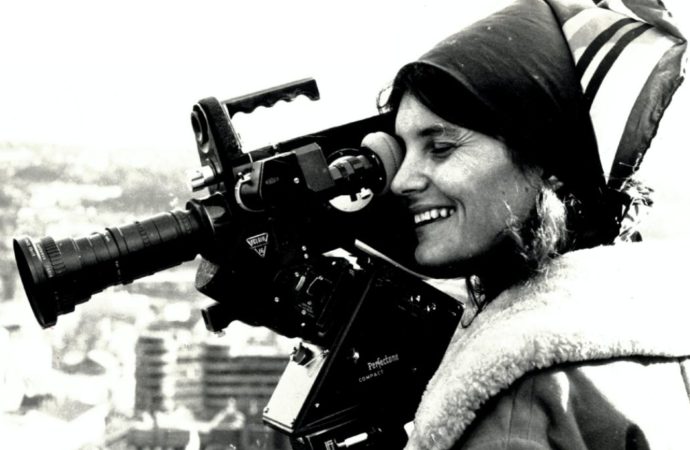

A retrospective cycle dedicated to Anja Breien revisits the most fertile and radical period of one of the key figures of Scandinavian cinema. Internationally recognised for Wives (Hustruer, 1975)—often read as the feminist counterpart to Husbands by John Cassavetes—Breien, together with Vibeke Løkkeberg and Laila Mikkelsen, helped define the female face of the Norwegian New Wave. Upon its release, Wives became one of the most discussed and analysed films in Norwegian cinema history, later generating two sequels that extended its dialogue with time and lived experience.
The retrospective brings together herfirst six feature films, arguably the most stimulating phase of her career, in which Breien traverses and challenges the codes of multiple genres with uncommon freedom: Rape (Voldtekt, 1971), Wives (1975), The Serious Game (Den allvarsamma leken, 1977), Inheritance (Arven, 1979), The Witch Hunt (Forfølgelsen, 1981), and The Paper Bird (Papirfuglen, 1984). All prints are presented in digital restorations carried out by the National Library of Norway, underscoring the project’s archival and contemporary value.
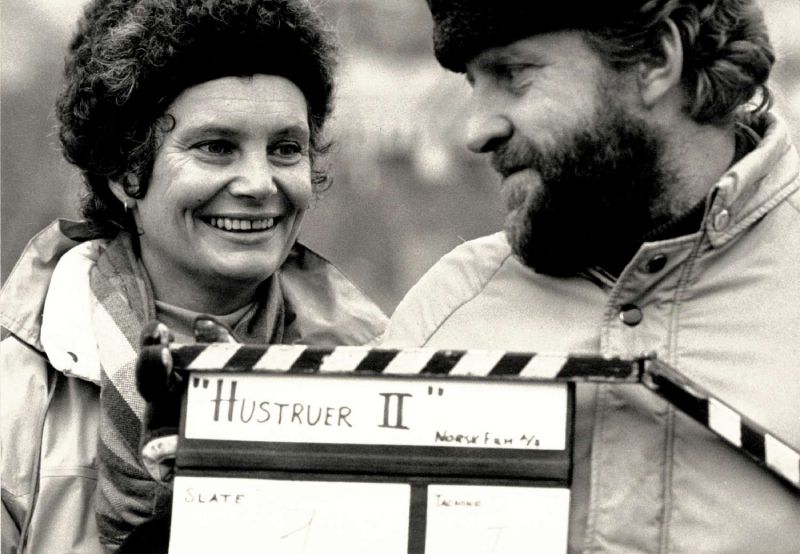
Far from a homogeneous universe, Breien’s work is defined by constant displacement. As critic Elsa Brita Marcussen wrote, her cinema resists fixation under a single label:
“In recent years, Breien’s image has crystallised into a common-place that considers her the best in Norwegian cinema, the top of the class. But precisely because of the continuous changes in subject matter and style, it seems to me that none of her films can be called typically Breien, nor that her work coherently shapes a homogeneous universe.”
This reading resonates with Breien’s own statements. In 1979 she acknowledged the tension between formal simplification and the exploratory impulse—only to add, on other occasions, that it was unthinkable for her to stop changing genres or exploring new variants of cinematic language.
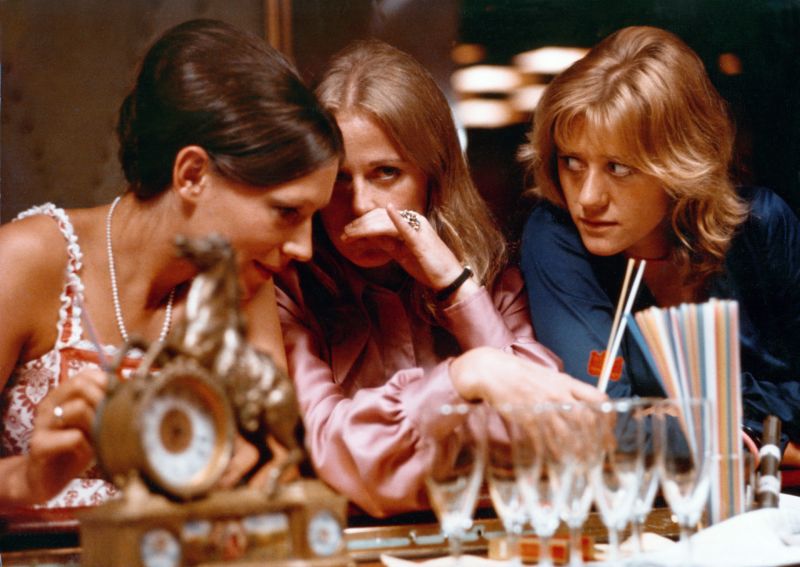
Wives (Hustruer) (Anja Breien, 1975).
Trained at the IDHEC in Paris and grounded in literature and theatre, Breien built a filmography in which power relations, a feminist gaze, historical re-reading, and formal exploration coexist without hierarchy. From the unsettling realism of Rape—selected for the Directors’ Fortnight at Cannes—to the elegant, late-career thriller The Paper Bird, via historical drama (The Witch Hunt) and literary adaptation (The Serious Game), her cinema rejects repetition and embraces risk.
The cycle will be screened from March at NUMAX (Santiago de Compostela), the Regional Film Archive of Murcia, and Cineteca Madrid; in April at the Film Archive of Cantabria and Cines Casablanca in Valladolid; in May at the Filmoteca de Catalunya (dates to be confirmed) and the Calle Mayor Film Club in Palencia; in October at the San Sebastián Women Filmmakers’ Film Days; and in November at the Film Archive of Navarre.
More than a retrospective consecration, this programme, curated by Spain-based film distributor Lost&Found, proposes an active re-reading of an auteur whose relevance lies precisely in her refusal to be fixed. Anja Breien emerges not as a closed canon, but as a filmmaker in perpetual motion, for whom each film was always a way of beginning again.


Nadie ha publicado ningún comentario aún. ¡Se tú la primera persona!