
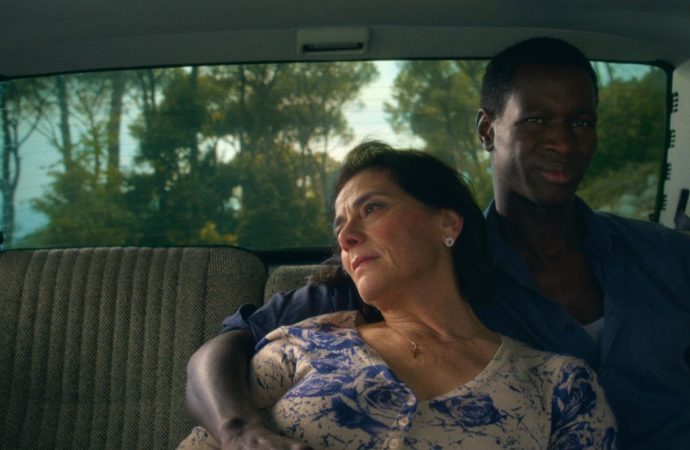
The Panorama and Generation Kplus sections of the 76th Berlinale, taking place from 12 to 22 February, once again confirm the festival’s role as a space of friction: a place where cinema does not merely reflect the world, but interrogates it, puts it under strain and, at times, destabilises it. Through a broad and heterogeneous selection — 37 titles in Panorama and 41 films across Generation Kplus and 14plus — the programme sketches an emotional and political map of our present.
Panorama: cinema as a space of confrontation in Berlinale
Panorama is defined this year by contrast — not only visual, but also affective and moral. The films enter into dialogue from markedly different positions, yet share a clear intention: to question the way we perceive reality beyond the screen. Love, desire, and self-determination emerge as recurring axes, not as isolated intimate themes, but as prisms through which social norms, power relations, and systems of exclusion are examined.
Migration (as addressed in Enjoy Your Stay by Dominik Locher and Honeylyn Joy Alipio), survival, and structural injustice form the backbone of much of the programme. Stories of lives in transit, of forced moral compromises, and of resistance in hostile environments coexist with direct portrayals of the clash between the individual and the state apparatus. Cinema becomes here a site of confrontation: against institutional racism, against political violence, against the normalisation of precarity. In parallel, established filmmakers return with works of seemingly modest scope but considerable reflective density, exploring repetition, memory, and the very nature of representation, as in the case of Hong Sangsoo with The Day She Returns.
Two Spanish co-productions will screen in Panorama, in addition to another one in Generation 14plus. Iván & Hadoum by Ian de la Rosa (a Spanish–German–Belgian co-production) marks the feature debut of the director and screenwriter of the series Veneno, telling a love story set in a greenhouse in southern Spain. Also included is Narciso, by Paraguayan director Marcelo Martinessi (The Heiresses, 2018), produced by Paraguay, Germany, Uruguay, Brazil, Portugal, Spain, and France. Chicas tristes, the debut feature by Fernanda Tovar (Mexico, Spain, France), will screen in Generation 14plus.
Documentary in Panorama and Generation Kplus
Documentary cinema occupies a central place in Panorama, both in terms of political urgency and cultural portraiture. Films observing the consequences of war or exile engage in dialogue with works devoted to key figures in contemporary thought and art, expanding the scope of the genre beyond immediate testimony. Added to this is a particularly significant presence of queer cinema in a year marked by the anniversary of the Teddy Award, with titles that broaden dissident historiography across fiction and documentary, reclaiming bodies, desires and narratives that have long been marginalised.
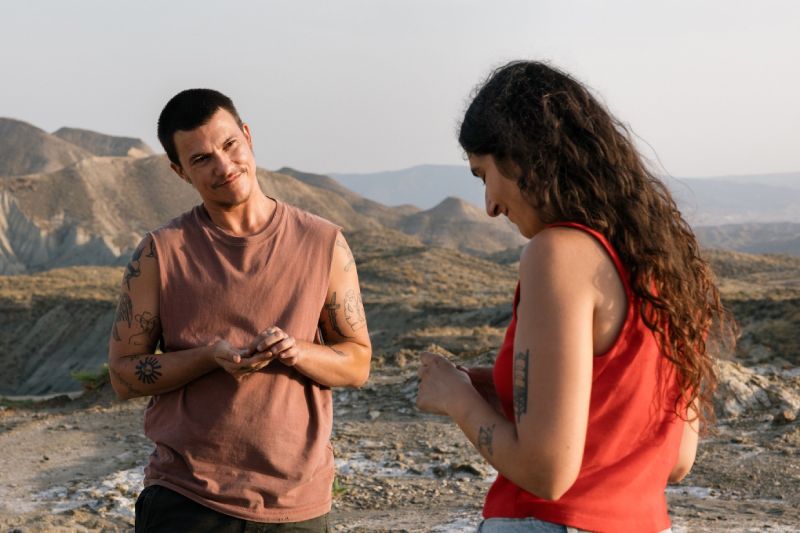
Ivan & Hadoum (Ian de la Rosa, 2026).
The Generation section, for its part, presents one of its most ambitious and diverse programmes to date. With a strong presence of debut features and world premieres, Generation Kplus and 14plus conceive cinema as a space of imagination, but also as a tool for social intervention. Childhood and adolescence are not portrayed as idealised or neutral stages of life, but as spaces traversed by politics, inherited memory and collective tensions.
Generation films repeatedly return to questions of time and transformation. Children and adolescents face loss, family change, displacement or identity discoveries that force them to redefine their place in the world. From intimate stories of friendship and courage to narratives that turn small gestures — an improvised journey, a summer on the urban periphery — into formative experiences, the programme offers a respectful and complex gaze on youth.
Documentary once again proves to be a vital strand within the section, addressing delicate issues such as trans identity, mental health or grief with a combination of directness and care rarely seen in cinema aimed at younger audiences. Short films further expand the programme’s formal and thematic range, drawing on animation, essayistic approaches and observational documentary to explore protest, migration, loss and imagination.
Taken together, Panorama and Generation Kplus form a coherent diptych within the Berlinale: independent cinema that does not shy away from the complexity of the world, that embraces formal and narrative risk, and that understands the screen as a space of resistance, inquiry and possibility. A cinema that offers no easy answers, but insists — with rigour and conviction — on the need to keep asking uncomfortable questions.
Panorama program
- The Hidden Face of the Earth (Arnaud Alain, France)
- Only Rebels Win (Danielle Arbid France-Libanon-Qatar)
- Enjoy Your Stay (Honeylyn Joy Alipio, Dominik Locher (Switzerland, France, Philippines)
- London (Sebastian Brameshuber, Austria)
- A Russian Winter (Patric Chiha, France)
- Paradise (Jérémy Comte, Canada, France, Ghana)
- Iván & Hadoum (Ian de la Rosa, Spain, Germany, Belgium)
- The Garden We Dreamed (Joaquín del Paso, Mexico)
- I Understand Your Displeasure (Kilian Armando Friedrich, Germany)
- Four Minus Three (Adrian Goiginger, Austria, Germany)
- The Education of Jane Cumming (Sophie Heldman, Germany, Switzerland, UK)
- Safe Exit (Mohammed Hammad (Egypt, Libya, Tunisia, Qatar, Germany)
- The Day She Returns (Hong Sangsoo, South Korea)
- Isabel (Gabe Klinger, Brasil, France)
- Lali (Sarmad Sultan Khoosat, Pakistan)
- Traces (Alisa Kovalenko, Marysia Nikitiuk (Ukraine, Poland)
- Two Mountains Weighing Down My Chest (Viv Li , Germany, Netherlands)
- Siri Hustvedt (Dance Around the Self) (Sabine Lidl, Germany, Switzerland)
- Around Paradise (Yulia Lokshina, Germany)
- Raging (Ryan Machado, Philippines)
- Narciso (Marcelo Martinessi, Paraguay, Germany, Uruguay, Brasil, Portugal, Spain, France)
- Jaripeo (Efraín Mojica, Rebecca Zweig , Mexico, USA, France)
- Roya (Mahnaz Mohammadi, Germany, Luxemburg, Czechia, Iran)
- Bucks Harbor – Pete Muller (USA)
- Lady (Olive Nwosu, UK)
- Tristan Forever (Tobias Nölle, Loran Bonnardot, Switzerland)
- Mouse (Kelly O’Sullivan, Alex Thompson, USA)
- If I Were Alive (André Novais Oliveira, Brasil)
- Douglas Gordon by Douglas Gordon (Finlay Pretsell, UK, France)
- Allegro Pastell (Anna Roller, Germany)
- Árru (Elle Sofe Sara, Norway, Switzerland, Finland)
- The Other Side of the Sun (Tawfik Sabouni, Belgium, France, Saudi Arabia)
- Enough is Enough (Elisé Sawasawa, France, DR Congo)
- Shanghai Daughter (Agnis Shen Zhongmin, China)
- Prosecution (Faraz Shariat, Germany)
- Numb (Takuya Uchiyama, Japan)
- The Moment (Aidan Zamiri, USA, UK)


No one has posted any comments yet. Be the first person!