


The 66th Thessaloniki International Film Festival (October 30 – November 9, 2025) dedicates its major tribute this year to the plot twist — one of the most powerful and versatile storytelling devices in film history. Under the title Plot Twist, Beyond the Sixth Sense, the festival proposes a journey through nearly five decades of cinema — from 1976 to 2025 — to explore how narrative reversals go far beyond surprise, becoming moments of ethical, political, and aesthetic revelation.
The program is curated by Myriam Ben Salah, director of The Renaissance Society in Chicago and future curator of the French Pavilion at the 2026 Venice Biennale. Her selection deliberately avoids the most obvious films of the canon, instead highlighting lesser-known titles, including two gems of Greek cinema: Kinetta by Yorgos Lanthimos and The Photograph by Nikos Papatakis.
This tribute is closely intertwined with the main theme of the 9th Thessaloniki Biennale of Contemporary Art, “Everything must change. Radical Intelligence. Saloniki 9”, curated by Nadja Argyropoulou. This dialogue is embodied visually in the exhibition “Plot Twist (the science fiction change)”, which opens on October 31 at the MOMus–Experimental Center for the Arts, serving as a prelude to the Biennale to be held in 2026.
An Exhibition Linking Film, Art, and Politics
The exhibition begins with Urthworks by Ben Rivers — comprising Slow Action (2010), Urth (2016), and Look Then Below (2019) — and also features the screening of his new film Mare’s Nest, winner at the Locarno Film Festival. Rivers will attend both the opening and the screening, in collaboration with the Athens Avant-Garde Film Festival.
The exhibition will also showcase U.F.O. lost in HEAVEN (2025) by the Errands Group and historic works by pioneering Greek filmmaker Kostas Sfikas, exploring how the plot twist can be understood not only as a cinematic structure but also as a political and cultural condition.
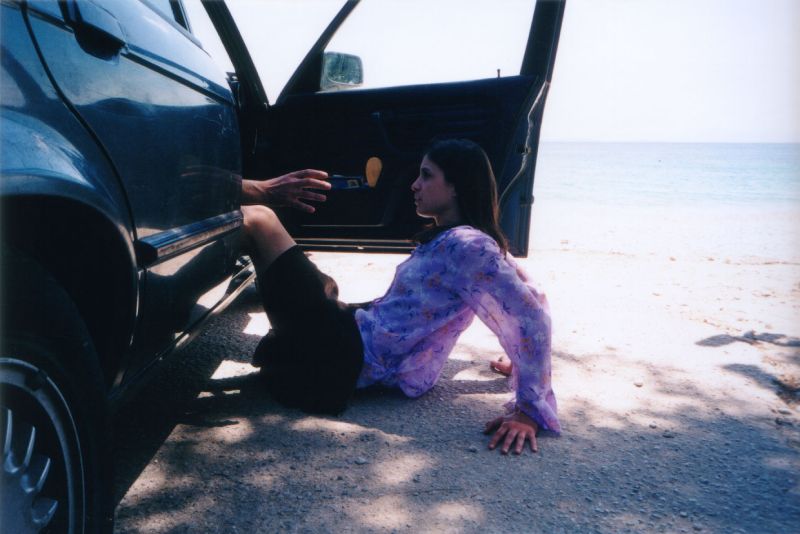
Kinetta (Yorgos Lanthimos, 2005)
Plot Twist as Recognition, Not Trickery
Festival Artistic Director Orestis Andreadakis emphasizes that the plot twist is not merely an ingenious surprise, but a device that destabilizes perception and reveals underlying structures of power: “stories are not innocent; they’re built on silences, omissions, and hierarchies of visibility.”
Ben Salah goes further: “A twist is not a trick. It’s the instant when what has always been there finally comes into view. It’s not revelation, but recognition. And that recognition arrives too late, carrying consequences.”
Contemporary Cinema: From Military Simulation to American Absurdism
The program spans multiple eras and geographies. Among the recent titles is Atropia (2025) by Hailey Gates, a Sundance winner. Set on a simulated Iraqi training set for American soldiers, it blends political satire and a fragile romance born in the heart of manufactured war.
Another standout is Bouchra (2025), the debut feature by Orian Barki and Meriem Bennani — a Fondazione Prada production mixing 3D animation and documentary aesthetics to explore the relationship between a queer filmmaker in New York and her cardiologist mother in Casablanca.
Genealogy of Violence (2024) by Mohamed Bourouissa turns a police ID check into a cinematic dissection of structural violence, using sharp visual language to expose what usually remains invisible.
Rewriting Memories and Myths
The tribute also revisits emblematic titles. In They Are the Dogs (2013) by Hisham Lasri, a TV crew follows a recently released prisoner through the restless streets of Casablanca, revealing the fracture between lived memory and mediated representation. The Time That Remains (2009) by Elia Suleiman intertwines personal family history with the collective trauma of the Palestinian people, folding historical and filmic time into a subtle act of resistance.
Kempinski (2007) by Neïl Beloufa dismantles narrative certainty with a futuristic story told from a past yet to come, while VHS – Cahloucha (2006) by Nejib Belkadhi takes us to Tunisia and the grassroots cinema of a local amateur filmmaker who turns his neighborhood into a film set.
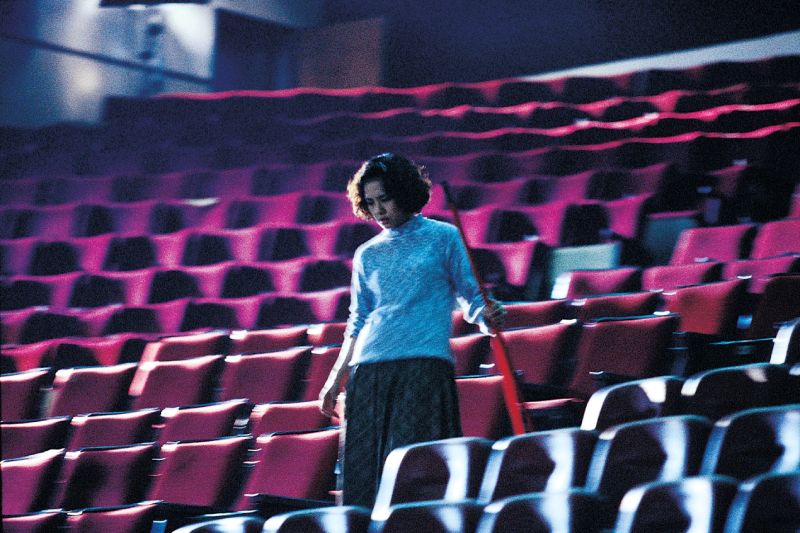
Goodbye, Dragon Inn (Tsai Ming-liang, 2003)
In Kinetta (2005), long before international fame, Lanthimos explores how three lonely figures reenact crimes in an empty seaside resort, a strange ritual about the instability of images and truth. Tsai Ming-liang’s Goodbye, Dragon Inn (2003) evokes a vanishing cinema: a soon-to-be-closed theater, ghosts in the shadows, suspended time, and collective experience turned into something almost sacred.
Irony, Desire, and Social Critique
Among the 20th-century classics, The Spousals of God (1998) by João César Monteiro follows a clochard who suddenly becomes a tycoon through divine intervention, but remains imprisoned by his own obsessions. Close-Up (1990) by Abbas Kiarostami uses a real-life identity fraud case to question the power of cinema to override reality itself.
The Photograph (1986) by Nikos Papatakis examines Greece’s political and social wounds — migration, disenchantment, fragile identity — through the deceptively simple device of a single photograph. The Vampires of Poverty (1978) by Carlos Mayolo and Luis Ospina uses biting black humor to critique the Western commodification of poverty.
Finally, And the Dogs Were Quiet (1976) by Sarah Maldoror, based on Aimé Césaire’s play, offers a powerful anticolonial allegory that dismantles historical silencing mechanisms.
An Expanded Tribute
As in every edition, Thessaloniki accompanies this tribute with a special thematic publication featuring essays by Myriam Ben Salah, Nadja Argyropoulou, Nikos Panagiotopoulos, Orestis Andreadakis, and Geli Mademli, among others. These texts place the plot twist in aesthetic, political, and philosophical contexts.

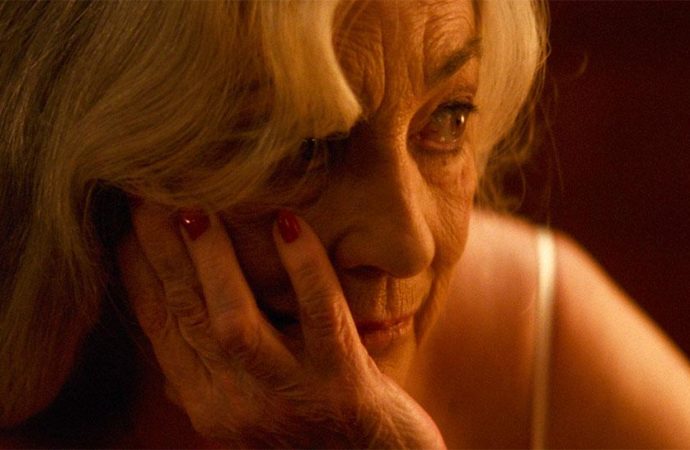
The Photograph (Nikos Papatakis, 1986)
Plot Twist: An Idea that Crosses Disciplines
The exhibition “Plot Twist (the science fiction change)”, open until November 16, 2025, serves as a bridge between cinema and contemporary visual arts. As Nadja Argyropoulou notes, “the plot twist is not a fugue but a necessity: a way of aligning with a world of multiple worlds, of opening possible futures.”
Through this, the festival establishes an organic dialogue between filmmaking, critical thought, and the visual arts. Rather than celebrating surprise for its own sake, it invites audiences to examine the structures that shape both stories and perception itself.
Thessaloniki 2025: A Festival that Thinks Cinema
The 66th TIFF positions itself not only as an international showcase but as a laboratory of ideas on how we narrate, perceive, and engage with stories. By bringing together films such as Close-Up, Goodbye, Dragon Inn, Kinetta, and And the Dogs Were Quiet alongside recent works like Atropia and Bouchra, the festival creates a cross-generational cinematic conversation tied together by one concept: unexpected revelation.
Beyond the classical narrative twist, this tribute explores how reversals destabilize certainties, reveal hidden structures, and force us to look again — not as passive spectators, but as active accomplices of the fiction.





No one has posted any comments yet. Be the first person!