

From 5 to 15 March 2026, the 28th Thessaloniki International Documentary Festival (TIDF) once again places Greek documentary filmmaking at the centre of the conversation, with a selection of 57 Greek feature-length documentaries across the competitive sections (International Competition, Newcomers, >>Film Forward), as well as Open Horizons, Platform+, and the Festival’s Special Screenings—both on-site and online. This is not merely a number; it is a cultural-policy statement at a time when European non-fiction is facing structural pressure—financing, circulation, rights—and when the urgency of the present demands new narrative forms.
The Festival underlines that commitment through two concrete measures that make institutional support measurable: first, it pays a rental fee to all Greek films included in the official selection; second, it expands the availability window of Platform+ on its digital platform from 6 to 20 March, extending the life of the works beyond the festival’s physical calendar.
A thematic mosaic: from archives to skin, from the metropolis to the boondocks
The Festival’s own description of this year’s Greek slate reads like a critical roadmap: personal viewpoints intersecting with collective memory; archival footage used as a tool for self-reflection; bodies tested to their limits; identities put under negotiation; the everyday anxiety of urban life versus the experience of living off the radar; and a lucid recording of present-day social tensions.
It is a map that invites us to read contemporary Greek documentary as a laboratory: a cinema no longer preoccupied with “explaining Greece” to outsiders, but with testing ways of thinking the collective through the intimate, and the political through the material. Much of this edition’s interest lies precisely in that friction: documentary as a space where testimony is not presented as “evidence” but as language; where narrative does not replace complexity, but manages it.
The Golden Grip (Fokion Bogris, 2026)
Three sections, three pulses
International Competition
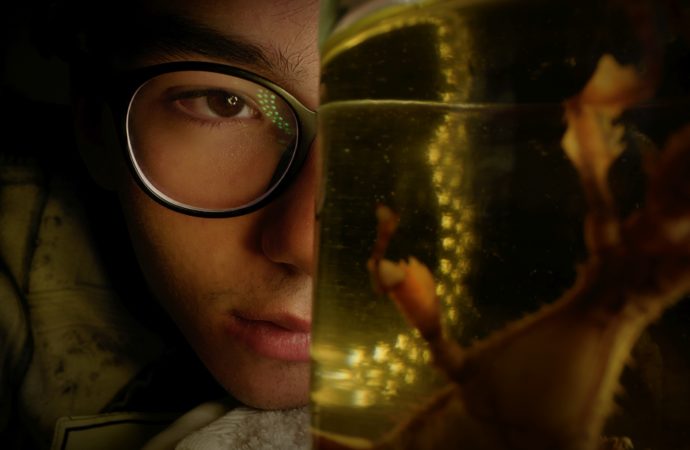
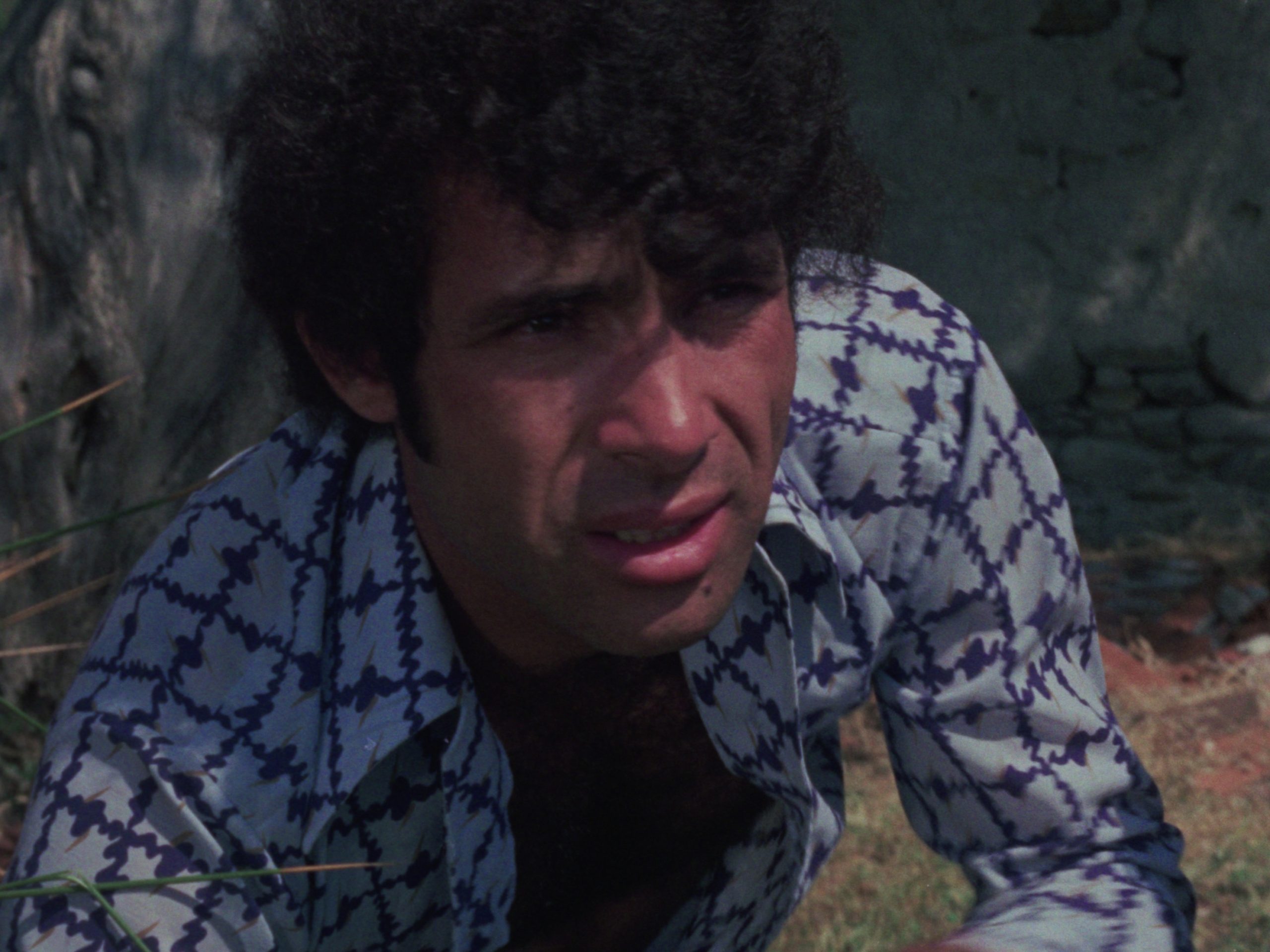
Three titles already suggest a wide range of approaches. Bugboy (Lucas Paleocrassas) follows a shy teenager who finds refuge in the world of insects—a fable about transformation, belonging, and fragility. The Golden Grip (Fokion Bogris) shifts the epic towards a supporting actor known for playing “tough guys,” and with that gesture rewrites five decades of Greek cinema from the margins: cultural history told by someone who never occupied centre frame. The Way Elsewhere (Eirini Vourloumis) offers a portrait of Athens through three veteran taxi drivers, blending observation with musical sequences—routine, desire, and memory in a city shaped by crisis and persistence.
Newcomers
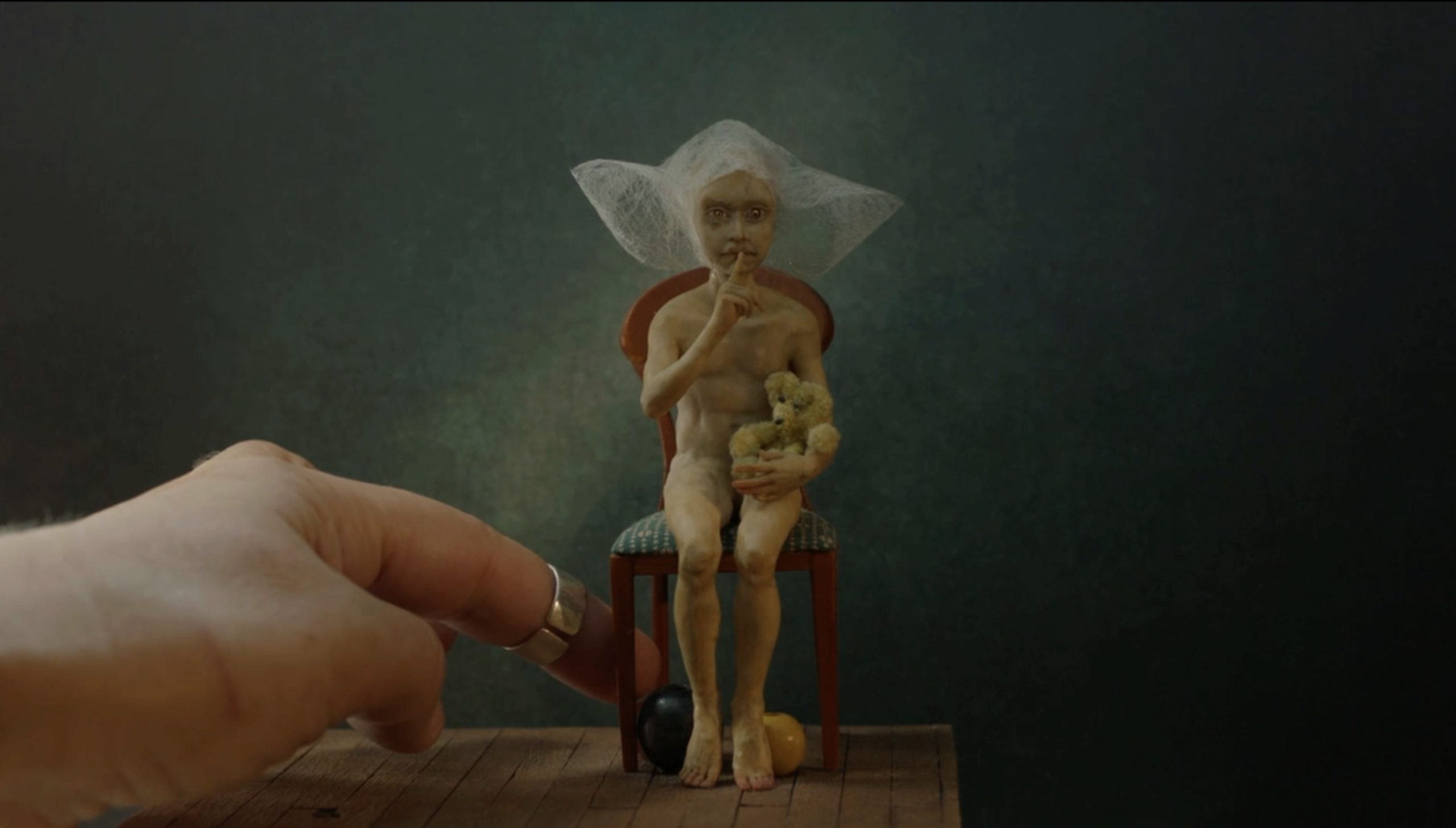
The Festival sharpens here its generational radar. At No Cost (Mary Bouli) asks an uncomfortable question through social realism: a young woman who dreams of becoming a ballet dancer and survives working in a bar decides to become an egg donor—“why not, it comes at no cost.” The phrase—so casual—becomes a narrative trap: once necessity enters the equation, the body stops being “one’s own” in the most literal sense. EXILE(S), Tales from an Island (Yorgos Iliopoulos) is set a hundred years after the Treaty of Lausanne and explores Imbros as a cultural palimpsest: ruins, rituals, uneasy coexistence, and borders that never quite settle. Tiny Gods (Panos Deligiannis) traces a pendulum between microcosm and world through the artist Kleio Gizeli—from apartment to classroom, from miniature works to educational practice, from introspection to the street.
>>Film Forward
The non-fiction pushes form to the edge. Dear Future (Christian Cheiranagnostaki) connects an underground archive in the Arctic, museum artefacts waiting in storage, hidden rock markings in a Swiss forest, and a neuroscience study on emotion: a world paused, waiting to be shaped by memory and nature. Horse and Rider (Panayotis Evangelidis) compresses three days of an encounter in a Thessaloniki hotel during a July heatwave—conversation, surprise, falling in love, and learning to listen, with time counting backwards. Stories of a Lie (Olia Verriopoulou) begins with a clinical and moral situation—a diagnosis concealed from a patient—to open an intimate investigation into “medical lies” and their impact on families and biographies.
Taken together, these choices point to a clear tendency: Greek documentary does not merely observe; it debates its own tools. How does one film a body? When does the archive illuminate, and when does it colonise? What does it mean to “tell it well” without turning someone else’s experience into a narrative product?
 Tiny Gods (Panos Deligiannis, 2026)
Special Screenings and Open Horizons: Greece as a living archive
The Special Screenings combine biography, popular culture, and community portraits: from Running on Waves (Yannis Karapiperidis), which retraces a life spanning shipping dynasties, revolutionary Cuba, and cultural policy, to more hybrid and festive proposals like Thrax Punks Kuzin (Giorgio Spyridis), where a punk band stages a culinary performance as joyful pandemonium.
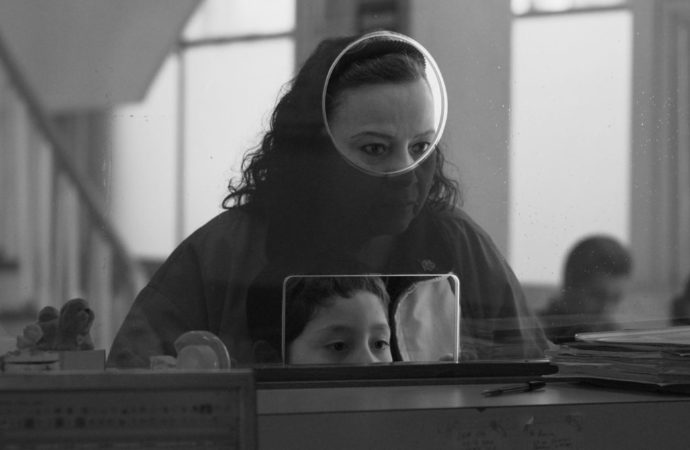
In Open Horizons, the range widens again: from medical volunteering on frontier islands in …One Road the Sea (Voula Kostaki) to Balkan exile memory in Railcars in the Rain (Thomas Sideris); from women’s prison life in The Night Smells of Jasmine (Antonis Kokkinos) to the farewell to Greece’s last traditional erotic movie theatre in Vilma: The Last Goodbye (Costas Bakirtzis, Kostis Stamoulis). Here documentary becomes a cartography of what official narratives usually exclude: ritual, margins, labour, grief, desire, and community.
Platform+ and the festival’s second life
The expansion of Platform+ is not a logistical detail; it defines an access policy. From 6 to 20 March, audiences can move through a parallel circuit where memory, activism, ecology, art, and public controversy meet. The section includes, for instance, a film amplifying the voice of a Palestinian researcher killed with his family in Gaza (Khalil, Please Answer…), a work on permafrost collapse in the Arctic (Mankind’s Folly), and a documentary that enters the debate on artistic freedom after the vandalism of works at the National Gallery (The Engraver).
Independent awards: when the ecosystem matters as much as the selection
Beyond the official prizes, Thessaloniki deploys a dense network of independent awards that—read carefully—maps the institutional architecture of contemporary documentary. In 2026, a new prize is added: the Municipality of Thessaloniki Award, accompanied by a €5,000 cash prize, aimed at films about urban life under the umbrella title City Stories. The framing is telling: the city as a geometric point of convergence for aspirations, precarities, and affective life.
The Festival also presents the “Human Rights in Motion” Award, established by the Council of Europe and accompanied by €5,000, for films that address human rights and democratic values across the three competition sections. Other independent awards include the Hellenic Parliament’s “Human Values” Award, ERT prizes, Alpha Bank’s Accessibility Award, EKKOMED prizes, Amnesty International, WWF Greece, a Youth Jury award from Aristotle University of Thessaloniki, WIFT GR, the Greek Association of Film Critics Award—and, notably, the two awards presented by FIPRESCI: one to the Best Documentary in the International Competition and one to a Greek film participating in the international competition sections.
This is not simply a parade of logos. It is an incentive system that can determine whether a film finds distribution, whether a project survives, whether a work travels. In an industry where circulation is often the real bottleneck, this parallel architecture is not decorative—it is strategic.
A reliable barometer
The commitment to 57 Greek feature documentaries ultimately functions as a barometer of a country—and a continent—in transition. Fiction often arrives late to the movements of the present; documentary works with a different temporality: it records, argues, returns, corrects, insists. Thessaloniki understands this and builds around it: it supports Greek films materially, widens viewing windows, and situates local production within larger debates—memory, rights, accessibility, ecology, the city.
In 2026, Greek non-fiction is not framed as a “national sidebar,” but as a field of force: a constellation of stories where individual experience measures itself against history, and where cinema can still operate as a device for sensitive truth.

No one has posted any comments yet. Be the first person!