
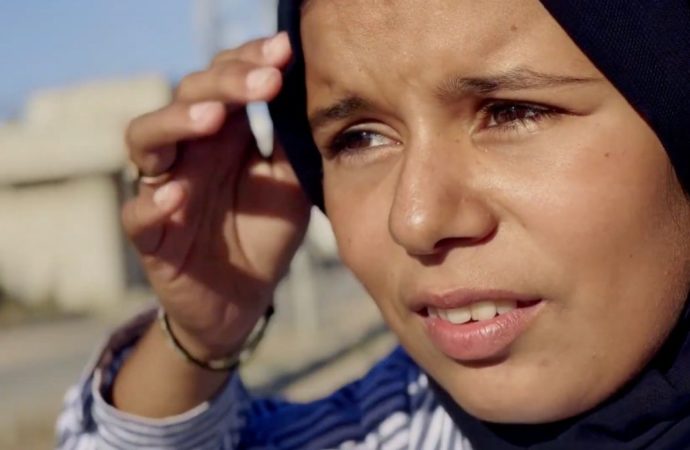
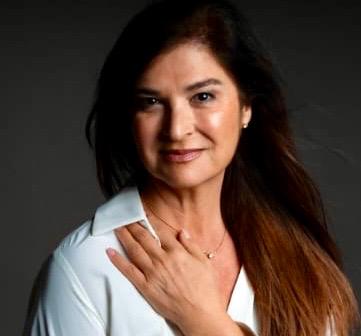
The International Crime and Punishment Film Festival (ICAPFF), held in Istanbul from 27 November to 2 December 2025, has consolidated itself as one of the most distinctive thematic festivals on the global circuit. Founded by Prof. Dr. Adem Sözüer and organized by the Justice and Cinema Association with the support of Istanbul Bilgi University, the festival stands at the intersection of cinema, academia, and human rights. Its long-standing motto, “Justice For All,” captures its ambition: to create a cultural and scientific platform where justice can be questioned, debated, and reimagined through the language of film.
Since its first edition in 2011, ICAPFF has hosted filmmakers, legal scholars, sociologists, psychologists, political scientists, and civil society actors, making it more than a festival, an ongoing, multidisciplinary forum. Alongside screenings and competitions, the festival’s Law and Criminal Justice International Academic Program and its VisionIST platform foster dialogue, support emerging filmmakers and encourage critical thought around justice in contemporary societies.
The 2025 edition opened with Divine Comedy, the latest film by Iranian director Ali Asgari, which competed earlier this year for the Golden Lion in Venice. Asgari’s minimalist approach exposes the absurdity of censorship, the fragile position of artists under repressive systems, and the contradictions of legal authorities who enforce rules they barely believe in. Set in today’s Tehran, the film moves between the art world and the margins of the city, portraying human stories with quiet urgency.
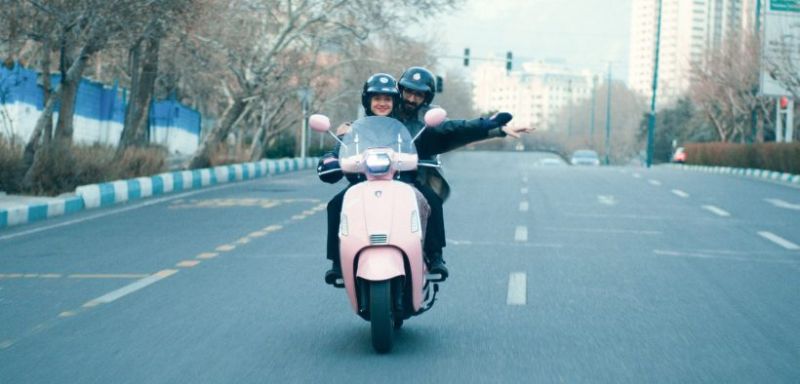
Divine Comedy (Ali Asgari, 2025).
International Golden Scale Feature Film Competition
A line-up of powerful contemporary works exploring justice from radically different angles. The International Golden Scale Feature Film Competition brought together one of the festival’s most diverse and thematically ambitious selections to date. From Gözde Kural’s Cinema Jazireh, a cross-border co-production spanning Turkey, Bulgaria, Romania, and Iran, to Bence Fliegauf’s Hungarian drama Jimmy Jaguar, the lineup offered a panorama of contemporary world cinema deeply engaged with questions of identity, violence, migration, and memory. The section also included Living the Land, Huo Meng’s contemplative Chinese feature; Reedland, a Dutch-Belgian crime drama by Sven Bresser; and Shadowbox, an inventive Spain-India-France-US co-production exploring the blurred frontiers between guilt and survival. Latin American cinema was represented twice: Sebastián Lelio with La Ola, while Anna Muylaert competed with The Best Mother in the World, a Brazilian-Argentinian story shaped by questions of maternal bonds and social precarity, which had premiered in Berlinale.
Completing the lineup, António Ferreira’s The Scent of Things Remembered—a Portuguese-Brazilian project centered on grief and sensory memory—added a delicate, introspective note to the competition. But the true revelation was Khartoum, directed collectively by Anas Saeed, Rawia Alhag, Ibrahim Snoopy, Timeea Mohamed Ahmed, and Phil Cox. This Sudan-UK-Germany-Qatar co-production stood out for its hybrid form, blending documentary testimonies with studio reenactments created after the filmmakers were forced to flee the country during a military coup. Its urgent, inventive storytelling ultimately earned it the festival’s top honour: the Golden Scale for Best Feature Film.
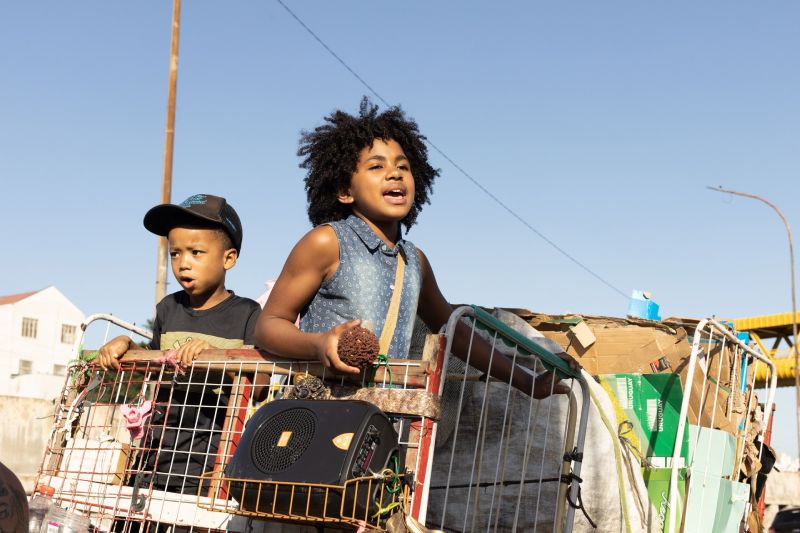
The Best Mother in the World, Anna Muylaert, 2025.
International Golden Scale Short Film Competition
The International Golden Scale Short Film Competition showcased an impressively diverse range of voices, geographies, and cinematic forms, reinforcing the festival’s commitment to exploring justice through multiple cultural lenses. Among the standout selections was In Retrospect, the German short by Mila Zhluktenko and Daniel Asadi Faezi, which blends archival sensibility with personal inquiry. Turkey was represented by Kırıkuzakçalar, a raw and intimate drama by Batınay Ünsür, while L’Mina, a French–Moroccan–Italian–Qatari co-production by Randa Maroufi, expanded the program’s thematic scope with its hybrid approach and community-driven cast. Other strong entries included My Name Is Hope, a Finnish production directed by Sherwan Haji, and Photographs Not Taken, Hanneriina Moisseinen’s visually striking Finnish–Swedish short exploring memory and absence.
The selection also featured several films that foregrounded political and social urgency. From Iran came Portrait by Farzam Tabibi, a delicate yet piercing reflection on identity; from Cuba and Spain, Primary Education, a sharp and compassionate look at childhood, and role learning directed by Aria Sánchez and Marina Meira; and from Belgium, the silent documentary Ramallah, Palestine, December 2018, which captures a moment of daily life with observational precision. Kurdish director Dilan Toftik contributed Sîtav, a powerful portrait of community resilience, while The Ban, a UK–Ireland production by Roisin Agnew, revisited the legacy of political censorship through testimonies from prominent Irish figures. Together, these shorts offered a rich and multifaceted landscape of contemporary concerns, reaffirming the festival’s role as a global platform for emergent and politically engaged filmmaking.
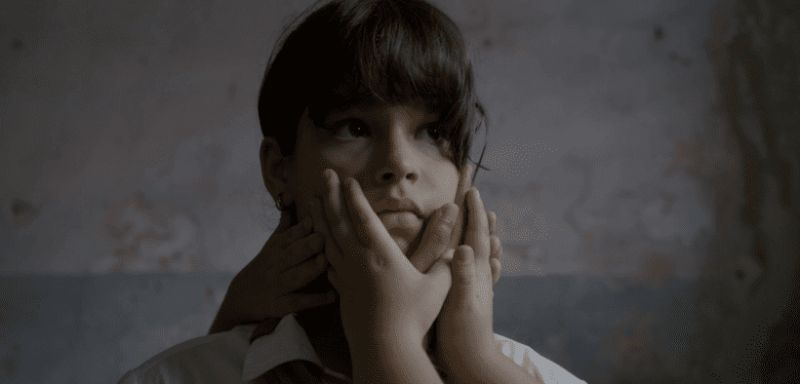
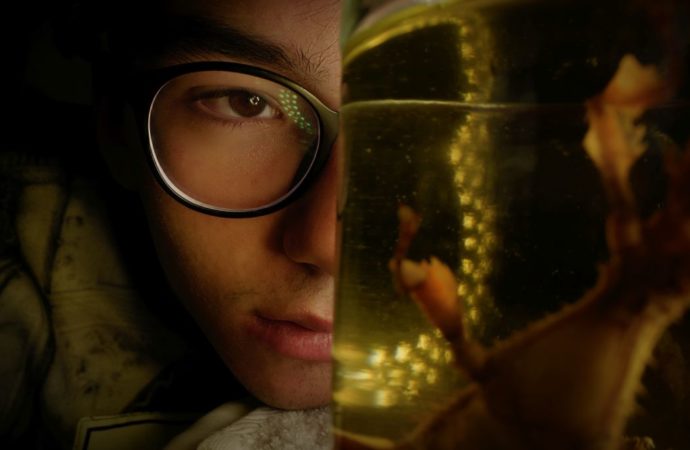
Primary Education (Aria Sánchez and Marina Meira, 2025).
Scale of Justice
A curated section examining global justice systems, abuses of power, and the resilience of communities fighting for rights and dignity. The Scale of Justice section —the International Crime and Punishment Film Festival’s platform dedicated to socially urgent, justice-driven storytelling— offered a compelling cross-continental snapshot of contemporary moral, legal, and ethical dilemmas. Paul Andrew Williams’ Dragonfly (UK) opened the lineup with a tense character study anchored by Andrea Riseborough and Brenda Blethyn, exploring responsibility and moral injury. From Central Europe, Tereza Nvotová’s Father brought a Slovak–Czech–Polish perspective on family breakdown, institutional failure, and the fragility of trust. The American entry Mad Bills to Pay, directed by Joel Alfonso Vargas, navigated the corrosive intersections of debt, inequality, and identity across English and Spanish-speaking communities, while Harris Dickinson’s Urchin (UK) closed the section with a raw, atmospheric portrait of marginalization and survival. Together, these films expanded the festival’s core mission: to use cinema as a lens through which to interrogate justice in all its contradictions and complexities.
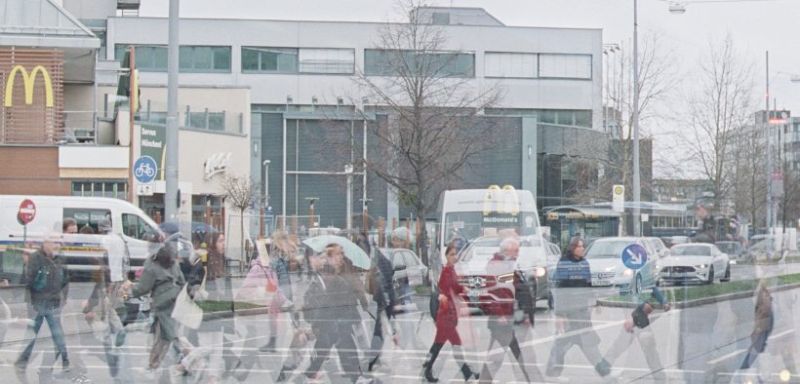
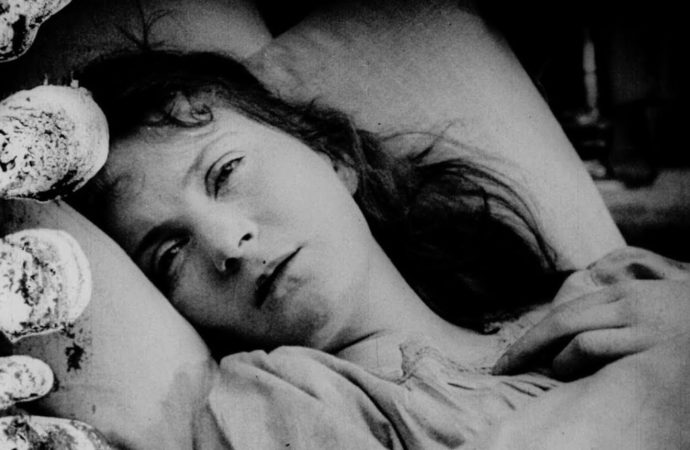
In Retrospect (Mila Zhluktenko and Daniel Asadi Faezi, 2025).
Special Program in the International Crime and Punishment Film Festival: Solidarity with Palestine
One of the most urgent and emotionally resonant segments of this year’s festival was From Ground Zero+: Gaza’s Unfinished Stories, a program comprising seven short films and one feature entirely shot in Gaza. Developed through an initiative led by acclaimed Gazan filmmaker Rashid Masharawi, and funded through international donations and partnerships, the project gives voice to artists living under constant siege. These films capture the dreams, resilience, creativity, and unbroken spirit of a population facing genocide and occupation—offering a rare act of self-representation in a context where Gazans are more often spoken about than heard. Continuing the path set by last year’s anthology From Ground Zero: Gaza’s Untold Stories, Masharawi empowers local filmmakers to document their own reality: displacement, hunger, mourning, and survival amid ruins. The result is a cinematic archive of suffering and endurance, and a powerful insistence that those responsible must one day be held accountable.
Presented personally by Masharawi —honored with the festival’s Justice Defender Award— the program also reminds viewers that Gaza is not only a site of devastation but a home to painters, actors, writers, musicians, and filmmakers whose work constitutes a form of resistance. Films such as Colours Under the Sky, Dreams of Farah and Zahra, and Gaza to Oscar underscore how art becomes both testimony and defiance, preserving stories that might otherwise disappear. Without scripts or artifice, these films present reality exactly as it is, engraving it into collective memory through the power of truth and imagination. In doing so, From Ground Zero+ reaffirms cinema’s essential role: to bear witness when the world looks away, and to uphold justice through the simple, radical act of allowing people to speak for themselves.
Tributes: Rüçhan Çalışkur, Wang Xiaoshuai and Yorgos Arvanitis
The festival paid homage to three towering figures, Wang Xiaoshuai, one of China’s most vital contemporary directors; Yorgos Arvanitis, a legendary Greek cinematographer known for his collaborations with Theo Angelopoulos and many major international auteurs and Turkish actress Rüçhan Çalişkur. Their masterclasses and public conversations added historical depth to a program already rich with political urgency.
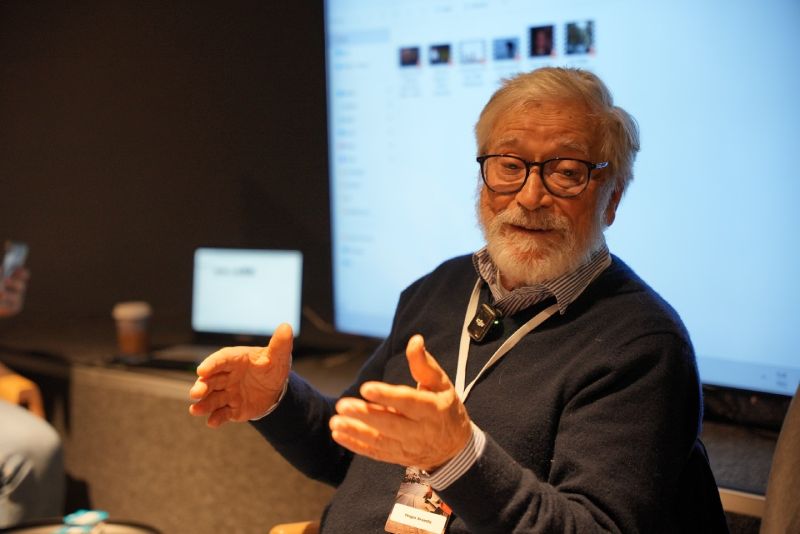
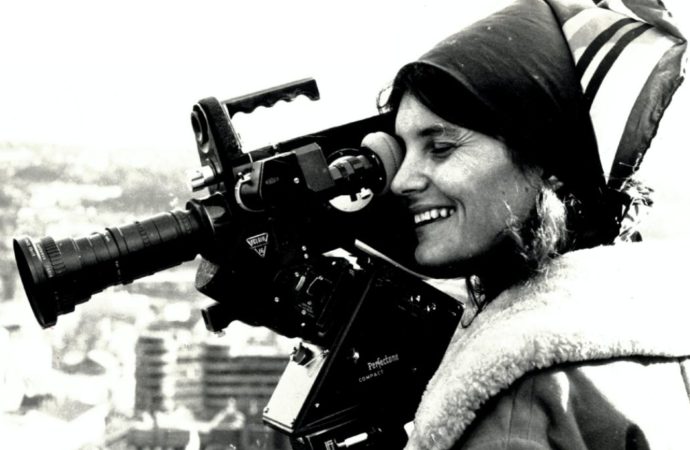
Yorgos Arvanitis.
Awards
Khartoum, a feature film directed by Anas Saeed, Rawia Alhag, Ibrahim Snoopy, Timeea Mohamed Ahmed, and Phil Cox, is a hybrid documentary of remarkable force and originality. As four Sudanese directors interview five residents of Khartoum —children living on the streets, a single mother selling tea, an activist, a civil servant— the sudden military coup forces the filmmakers into exile. They recreate the stories in a studio using green screen, transforming documentary into an act of reinvention. Shot across Khartoum, Cairo, and Nairobi with borrowed mobile phones and enriched with animation, the film presents an intimate yet political portrait of a city shaped by war, hope, and human resilience.
In Retrospect, a short film directed by Mila Zhluktenko and Daniel Asadi Faezi, which premiered in competition at the 2025 Berlin Film Festival, masterfully intertwines archival footage from Munich’s Olympia Shopping Center, where, in 2016, a racist attack took place. The mall had originally been built by immigrant workers for the 1972 Olympics. In Retrospect also includes scenes from Iranian-German filmmaker Sohrab Shahid Saless‘ film Empfänger unbekannt. The short draws connections between the center’s history, the attack, and the discrimination Saless endured, tracing a melancholic line from utopia to dystopia and revealing how societal hatred mutates across generations.
A Festival Where Cinema Meets Civic Imagination
What distinguishes ICAPFF is its dual identity: a rigorous academic forum and a bold cinematic meeting point. It is one of the few festivals where researchers debate legal theory in the morning, filmmakers dissect representation and responsibility in the afternoon, and audiences confront real stories of injustice by night. In an era where cinema is increasingly pressured to entertain rather than provoke, ICAPFF defends a different vision—one where films become catalysts for ethical inquiry, civic awareness, and, ultimately, collective change.
As it celebrates its 15th edition, the festival reaffirms its commitment: to use cinema not merely to show the world, but to question it.

No one has posted any comments yet. Be the first person!