
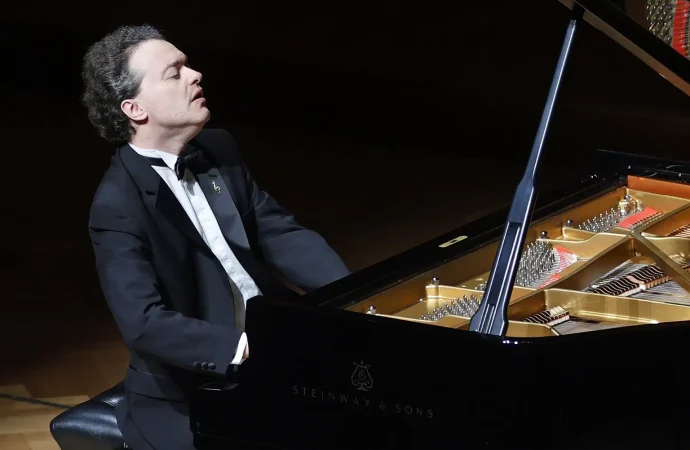
The arrival of Evgeny Kissin at Teatro La Fenice, in an extraordinary concert marking the tenth anniversary of Musikàmera, unfolded this year within a singular context. As one of the great figures of contemporary piano—embodying the maturity of a long tradition—took the stage, the city also witnessed the launch of the VeneziaPianoFestival, an initiative by the Fondazione Amici della Fenice. Dedicated in its first edition to Frédéric Chopin and open to young performers across some of Venice’s most emblematic historic venues, the festival operates almost as a mirror through which to view, in perspective, careers like Kissin’s: that of a prodigy who, from his early appearances alongside Herbert von Karajan, Valery Gergiev and Zubin Mehta, has become an undisputed reference. Between the impulse of emergence and the authority of consecration, Venice thus offered the ideal setting to listen afresh to one of the last heirs of the great pianistic tradition, absent from the lagoon city since as far back as 1988, when, accompanied by Vladimir Spivakov, he was still a young promise.
The Russian pianist’s recital opened with the Sonata No. 7 in D major, Op. 10 No. 3 by Ludwig van Beethoven, immediately revealing a conception firmly grounded in architecture. Kissin avoided overly marked contrasts, opting instead for a measured balance between tension and release. The “Largo e mesto,” the expressive core of the work, emerged restrained, almost inward, with a carefully controlled temporal expansion in which the intimate continuity of discourse prevailed over episodic dramatization.
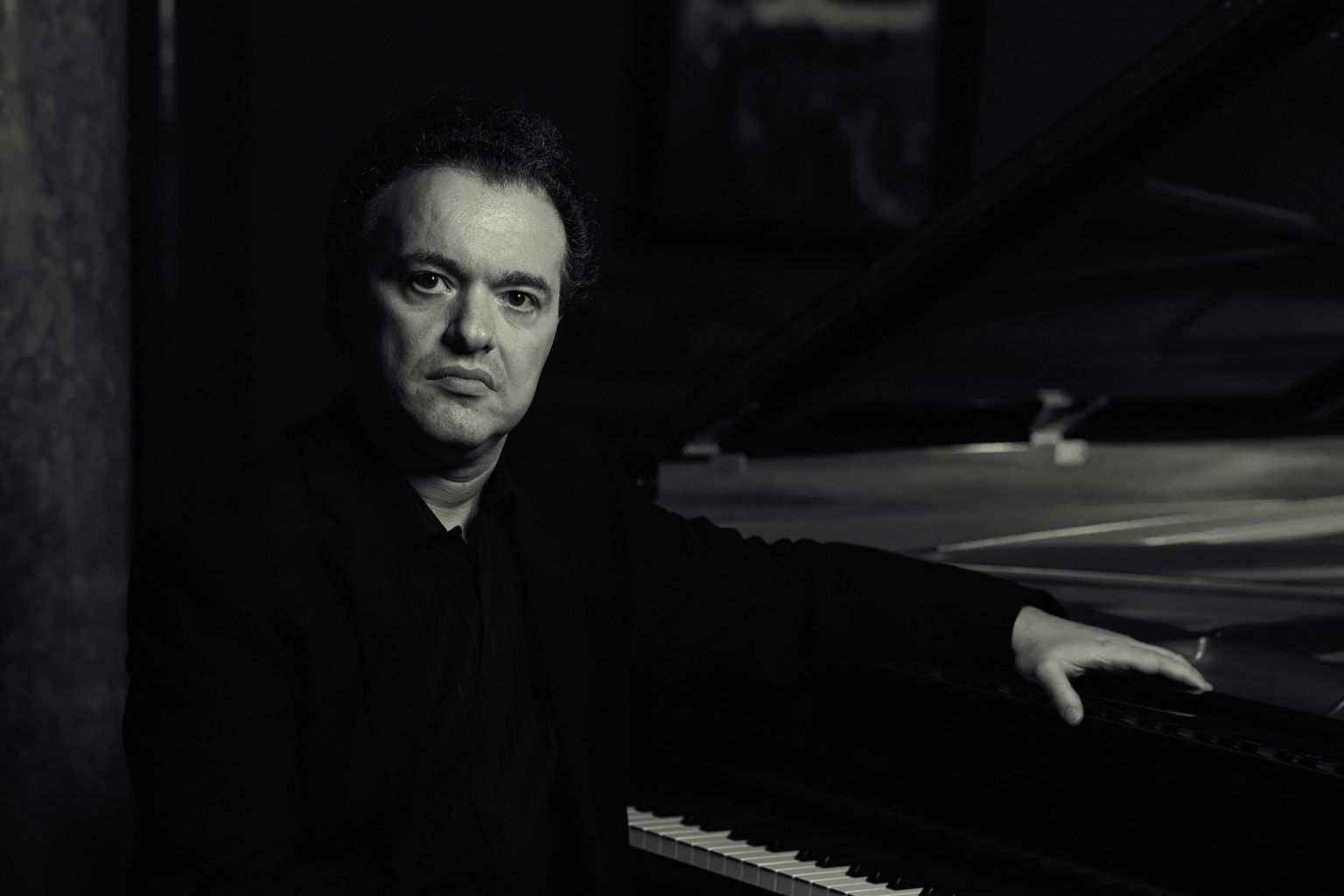
Evgeny Kissin. © Philip Andrukovich.
The group of mazurkas by Chopin (Opp. 27, 29, 35, 39 and 51), which followed in the first half, introduced a shift in atmosphere while maintaining overall coherence. Kissin worked with a refined timbral palette, avoiding any overt folkloric emphasis in favour of a contemplative intimacy. Yet it is precisely here that his approach revealed certain limitations: the elegance of sound and control of detail did not always translate into true elasticity of phrasing—that internal breathing essential for Chopin to attain a fully emotive and organic dimension.
What remains is the impression of a pianist who measures, calibrates and constructs with uncommon lucidity, yet in certain repertories seems to resist that slight abandonment which makes a musical discourse truly pulse.
Even more problematic was Schumann’s Kreisleriana, Op. 16. The choice of a unified vision, almost classical in its control, was undoubtedly dazzling, yet it softened the more irregular and visionary contours of Schumann’s writing. Structural clarity was unquestionable, as was the virtuosity, but at the cost of a certain expressive rigidity: what was missing was that agogic flexibility capable of animating the abrupt changes of character, the emotional instability that constitutes the very nerve of the work.

Evegeny Kissing in La Fenice © Musikamera.
The Hungarian Rhapsody No. 12 by Franz Liszt closed the programme with virtuosity that was fully mastered and never gratuitous. Here, control—the hallmark of the entire evening—found its most convincing ground: the progression of energy, clarity of articulation and technical solidity allowed both the spectacular dimension and the internal logic of the piece to unfold effectively.
What remains is the impression of a pianist who measures, calibrates and constructs with uncommon lucidity, yet in certain repertories seems to resist that slight abandonment which makes a musical discourse truly pulse. In Beethoven and, above all, in Liszt, this distance becomes a virtue; in Chopin and Robert Schumann, however, it reveals an expressive margin still to be conquered. The audience, attentive and warm, received the performance with enthusiasm and prolonged the evening with sustained applause, to which Kissin responded with several encores; in these, with a freer and less contained gesture, a more direct and communicative expressivity briefly emerged.


No one has posted any comments yet. Be the first person!