

The debate on the taxation of art reappears cyclically in Spain, as a symptom of something that never quite gets resolved. Galleries are calling for a reduction in the VAT applied to the sale of artworks, currently set at 21%, arguing that the Spanish market is at a disadvantage compared to other European countries where the tax is significantly lower. France, Italy, and Portugal apply reduced rates ranging between 5% and 7%, and this comparison serves as the main justification. If the art market is international, if collectors buy indistinctly at fairs and through global platforms, then taxation should be equivalent to prevent sales from shifting toward more favorable territories.
Under this logic, lowering the tax would streamline the market, encourage collecting, and ultimately facilitate the circulation of artworks. The argument appears reasonable from a strictly economic perspective. However, upon closer examination, a fundamental paradox emerges: the tax reduction would primarily benefit the buyer and the intermediary managing the transaction, while the structural situation of the artist would remain largely unchanged.
At the center of this discussion stands a figure who rarely appears as the protagonist of the economic debate: the artist. While the sector insists on making the market more competitive, the legal framework that should protect creative labor continues to develop slowly. The so-called Artist’s Statute, in Spain, conceived to recognize the specific labor conditions of cultural work, seeks to address a problem inherent to the entire art economy, yet remains stalled in prolonged debate.
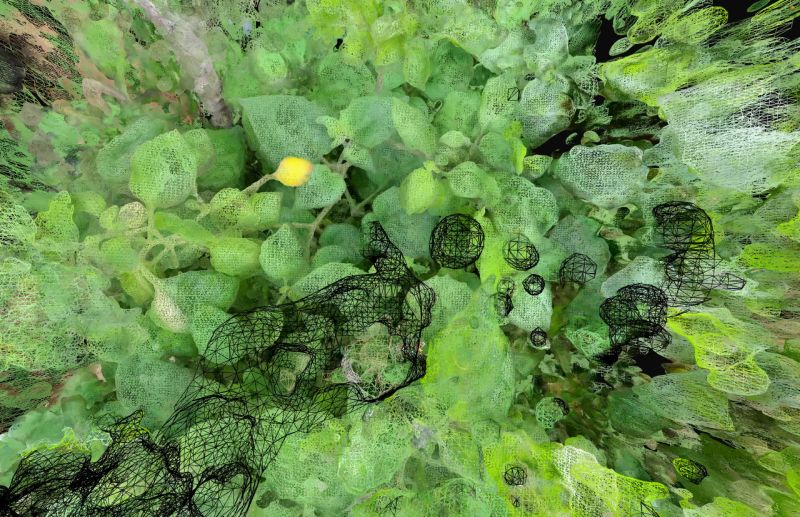
Post Natural Matter © Space Circles
Artistic creation does not follow the rhythms or structures of conventional labor. An artist may spend months or years researching, experimenting, producing, and failing before a work comes into existence as an object that can be sold. This invisible time constitutes an essential part of the cultural value later attributed to the work, yet it rarely translates into income or social protection. In a sense, the market only recognizes the final moment of the process—the point at which the work becomes a commodity. Everything that precedes it remains in a diffuse zone where the art economy rests on the structural precarity of those who produce the work.
This situation becomes even more evident when examining the usual functioning of galleries. Historically, galleries have played a fundamental role in shaping contemporary art: discovering artists, producing exhibitions, building relationships with collectors, and generating institutional visibility. However, their economic model differs significantly from that of other cultural sectors. Unlike publishing, the music industry, or cinema, the gallery operates under a distinct financial structure.
Does it make sense to reduce the tax burden on the purchase of objects that, in many cases, function as instruments of investment or wealth accumulation?
The dominant system is one of consignment: the artist produces the work and the gallery exhibits it. If the piece is sold, the revenue is typically split evenly. This means that the artist assumes a large part of the initial economic risk. Production, transport, studio space, storage, and installation often fall on the artist, while the gallery acts as an intermediary in the final transaction. It is also true that the gallery itself represents an entrepreneurial venture. Maintaining a space, paying rent, sustaining an administrative structure, participating in international fairs, producing exhibitions, and cultivating relationships with institutions and collectors all require significant financial and organizational effort.
The gallery operates within the same fiscal framework as any other business, subject to taxes, structural costs, and the uncertainty inherent to any entrepreneurial activity. In that sense, its functioning also depends on a delicate economy in which each exhibition, each fair, and each sale contributes to the sustainability of the project. Within this structure, risk is distributed unevenly: the artist bears the material cost of the work, while the gallery assumes the cost of the commercial and symbolic apparatus that enables the work to circulate within the market. In my view, however, this model produces a figure that has become all too familiar within the contemporary art ecosystem: the artist who sustains the system without necessarily achieving economic stability in return.

Post Natural Matter © Space Circles.
The artist finances their own production, participates in exhibitions that generate institutional prestige but not income, and relies on the hope that accumulated recognition will eventually translate into sales. Meanwhile, the system continues to function thanks to that creative energy, almost always offered under conditions of economic fragility. It is difficult not to think of the popular expression describing someone who pays for everyone without getting anything in return—the cultural system’s simp. Reducing VAT on the purchase of artworks does not alter this structure. It may allow a collector to pay less for a piece or a gallery to close more transactions, but it does not change how risk or value are distributed within the chain of artistic production.
In a previous text, “The Precariousness of Promise”, it was argued that precarity in the cultural world is not an accident or a temporary phase, but a structural device sustained by enthusiasm and the promise of future recognition. The cultural system has normalized a logic in which the artist accepts uncertain working conditions because they are offered something that appears more valuable than immediate payment: visibility, legitimacy, institutional presence, or the possibility of one day entering the market or museum circuit. The reward always seems just ahead—always in the next project, the next exhibition, the next fair. This promise functions as a mechanism of emotional regulation, allowing the system to keep operating even when material conditions are clearly unfavorable.
Within this economy of promise, the artist becomes the subject who produces symbolic value without any guarantee of proportional remuneration. Remedios Zafra has described this condition, noting how enthusiasm and vocation often serve as a perfect alibi for forms of cultural self-exploitation. Creative work is framed as a privileged activity, almost as a life privilege, and this narrative pushes material conditions into the background. The promise of creative freedom, in reality, conceals an economy based on permanent uncertainty.
Another actor enters this equation, often remaining in the background of cultural discourse: the collector. In the artistic imagination, the collector is frequently portrayed as a quasi-romantic figure—a lover of art who builds a collection guided by taste, intuition, or aesthetic passion. The reality, however, is more complex. In many cases, contemporary collecting is tied to large private fortunes, investment funds, financial structures, or capital diversification strategies. Art can function as an asset, a store of value, and an instrument of social prestige. It is not always an innocent relationship with culture.
The opacity of the art market, the difficulty of establishing objective pricing, and the international circulation of high-value works have, for decades, fueled suspicions about its use as a tool for money laundering or the concealment of wealth. This is not to suggest that all collecting operates under such logic, but rather to acknowledge that the art market possesses characteristics that make it particularly attractive for certain financial operations. Works can move easily across jurisdictions, be stored in freeports, sold through intermediaries, and assigned prices that depend more on symbolic consensus than on objective metrics.
In this context, art also becomes an economic instrument. If we accept this possibility, the fiscal question takes on a different dimension. Does it make sense to reduce the tax burden on the purchase of objects that, in many cases, function as investment vehicles or instruments of wealth accumulation? And, following this logic, should the tax system favor such transactions in the same way it would favor goods or services linked to more urgent social needs?
The fiscal debate often overlooks an even deeper issue related to the very nature of the contemporary art market. The gallery model developed around an economy of the art object—painting, sculpture, the unique work, signed, transportable, and capable of being stored or resold. For much of the 20th century, this logic functioned as the main engine of art circulation. However, many current practices operate in territories where the object no longer occupies the central role in artistic production. Digital art, performative practices, research-based projects, collective processes, generative art, or site-specific interventions produce forms of value that cannot always be easily translated into marketable objects. The gallery system continues to operate under the logic of the exchangeable object, while a significant portion of contemporary creation unfolds within dynamics where value resides in process, experience, or knowledge production.
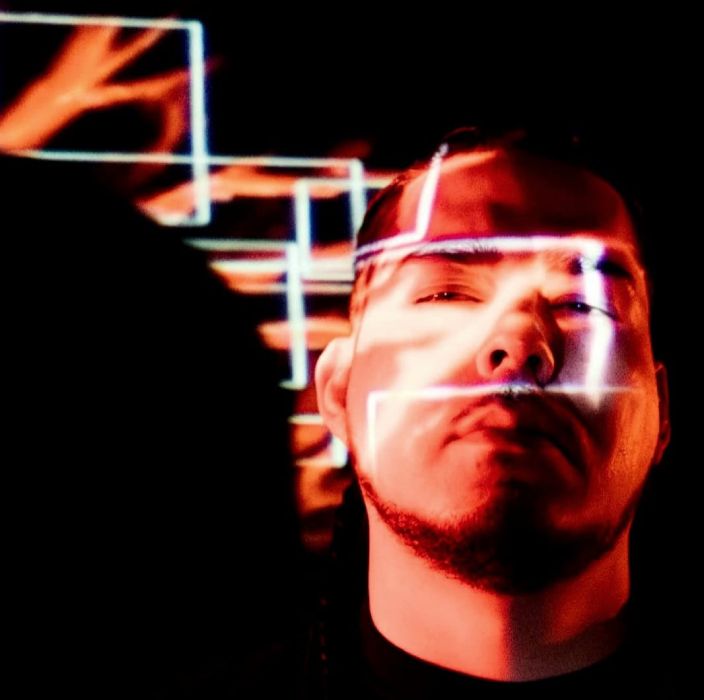
Marina Barruer. Visuales con TouchDesigner.
Philosopher Boris Groys has argued that contemporary art is not defined solely by the objects it produces, but by the contexts it generates. In this sense, the artwork is no longer merely material to be bought or sold, but a cultural operation that reorganizes relationships, discourses, and forms of perception. Yet the market still depends on objects that can circulate within a system of ownership. This tension between process and commodity helps explain many of the current contradictions within the art ecosystem. Sociologist Pierre Bourdieu described the field of art as a space where symbolic and economic capital intertwine in complex ways, producing hierarchies that do not always align with conventional market logic. Within that field, the artist generates symbolic value that other agents—institutions, galleries, collectors—can later convert into economic value.
For this reason, the issue of VAT, while relevant, appears almost as a superficial symptom of a broader problem. In Spain, this issue takes on particular intensity. It is not merely a fiscal matter or a technical adjustment within the market, but part of an economic, social, and political structure shaped by deeply rooted inertias that are difficult to transform. The Spanish cultural system still operates, in many respects, under archaic logics that fail to fully engage with contemporary modes of artistic production and international circulation. While other contexts have more decisively integrated experimental practices, hybrid models, and economies linked to digital or research-based art, contemporary art in Spain often remains in a peripheral position relative to major global developments. This disconnection not only limits the international projection of artists but also reinforces a fragile internal ecosystem—poorly articulated and overly dependent on traditional structures that hinder adaptation to a constantly evolving artistic field.
The real question is not simply how to make the Spanish art market more competitive, but how value is distributed within the cultural system.
If the priority is to strengthen the artistic ecosystem, the discussion should shift toward the effective protection of those who generate creative work. This entails developing labor frameworks adapted to the intermittent nature of artistic practice, establishing more balanced contractual relationships between artists and galleries, providing economic recognition for research-based processes, and exploring models of circulation that do not rely exclusively on the sale of unique objects.
Contemporary art today generates vast amounts of cultural, intellectual, and symbolic value. Museums, fairs, educational institutions, and digital platforms are constantly nourished by this creative flow. Yet those who produce that value continue to occupy the most vulnerable position within the economic structure that sustains it. Reducing VAT may facilitate certain commercial operations and alleviate specific market constraints, but it is unlikely to transform the underlying logic of the system unless the structural precarity of artists is addressed simultaneously.
As long as that issue remains secondary, the fiscal debate risks becoming a discussion that improves the conditions of purchase without altering the real economy of creation. In such a scenario, art will continue to circulate, galleries will continue to sell, and collectors will continue to acquire works—but the figure silently sustaining the entire system will too often remain the same: the artist who produces value in exchange for precarity.
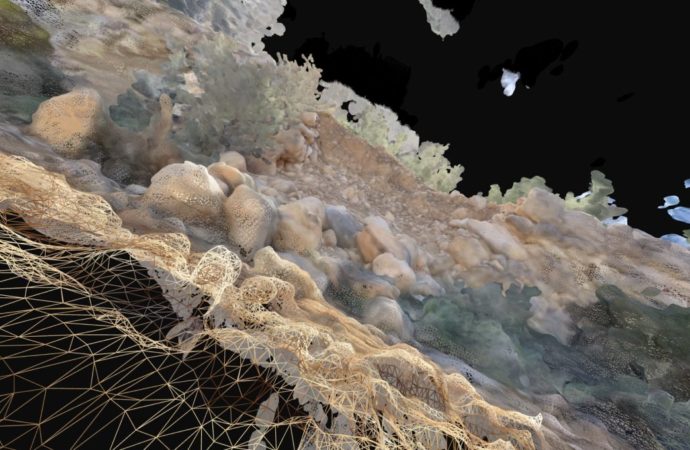
Header image: Post Natural Matter © Space Circles




No one has posted any comments yet. Be the first person!