


With Almodóvar’s cinema, there is no middle ground: one either loves it or hates it. This has been the case since 1980, with Pepi, Luci, Bom, and Other Girls Like Mom, his debut feature. What is undeniable, however, is that over 46 years of career and 24 feature films—in addition to several shorts—he has built one of the most solid, personal, and internationally recognized trajectories in Spanish cinema.
That status belongs to him by right, beyond the turbulent realms of taste, age, or positioning driven by reactance and snobbery. He is a classic with craft and command of the industry, with flaws that are at times intentional and hyperbolic, his egotism, his brand-driven premises, and that emotional epistemology rooted in a deeply sentimental knowledge of cinema history. This way of understanding filmmaking may distance him from the worlds of younger creators raised within television and new narrative forms, even if he is not unfamiliar with them. All the same, it is remarkable that Almodóvar continues to make his cinema successfully after five decades—without betraying himself and always moving forward.
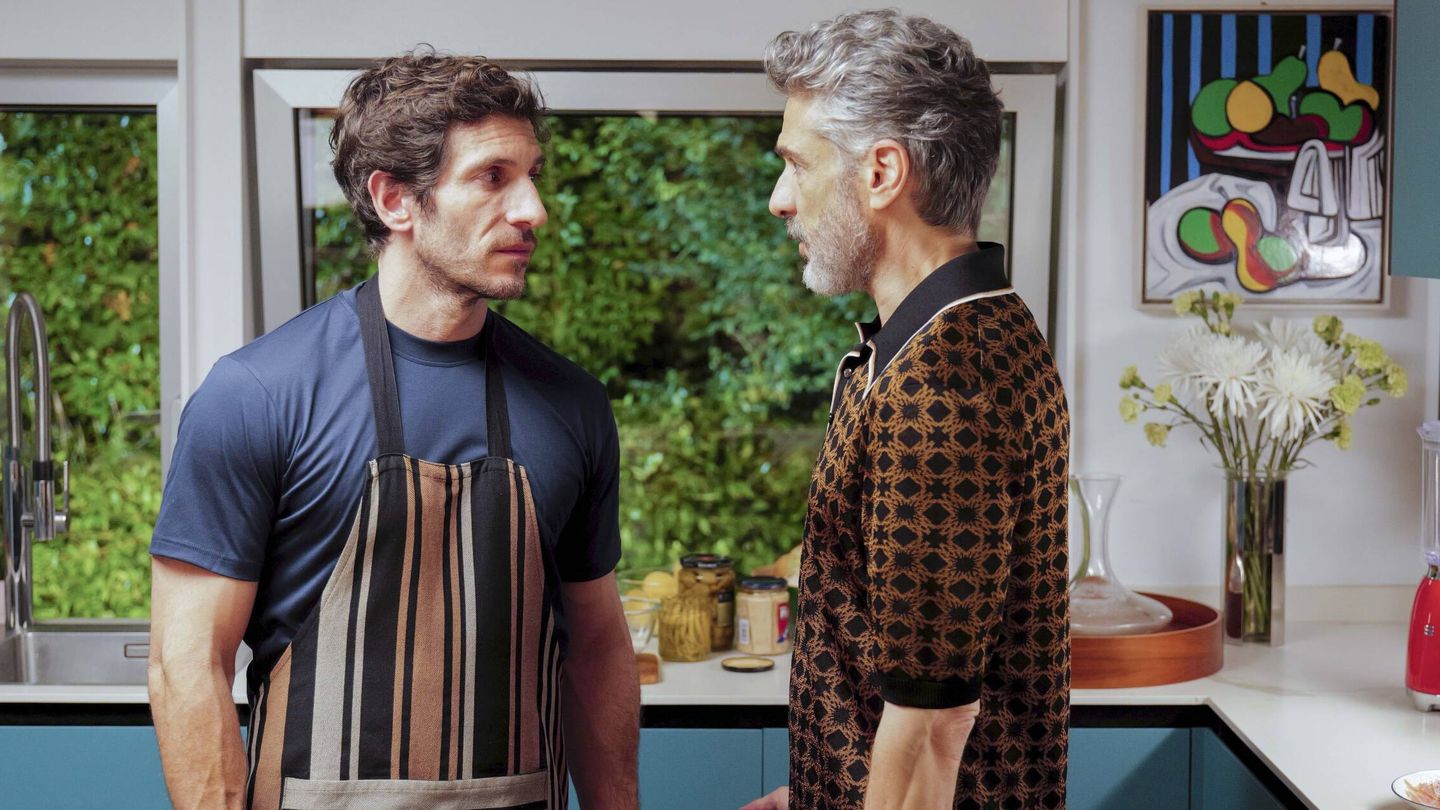
Bitter Christmas (Amarga Navidad, 2026) is one hundred percent Almodóvar. It is an exercise in metacinema and autofiction, filled with the kind of intertextual references that have defined his work since Law of Desire or Women on the Verge of a Nervous Breakdown, and which he has revisited in Tie Me Up! Tie Me Down!, Talk to Her, Bad Education or Broken Embraces, culminating in Pain and Glory, his most confessional film, to which this new work is closely linked. Cinema within cinema; a matryoshka-like structure that operates both as a creative process and as a dialectical one. There is a dialogue between the creator and himself, and with the spectator—a conflict born from a story within a story, populated by characters who function as heteronyms of Almodóvar himself, all of them aware of that very condition.
Almodóvar deploys a fierce critique of himself—something autofiction allows—and this lends the film a striking moral honesty regarding the creative process.
The film opens strongly, narrating from two different temporal planes what is ultimately the same story. However, the screenplay struggles to sustain that initial promise, revealing certain unevenness and structural gaps. Characters appear and disappear without fully taking shape, raising doubts about their necessity within the narrative or within the film’s exploration of pain, motherhood, and grief. Ultimately, what emerges is a search for love within a space suspended between fiction and reality.
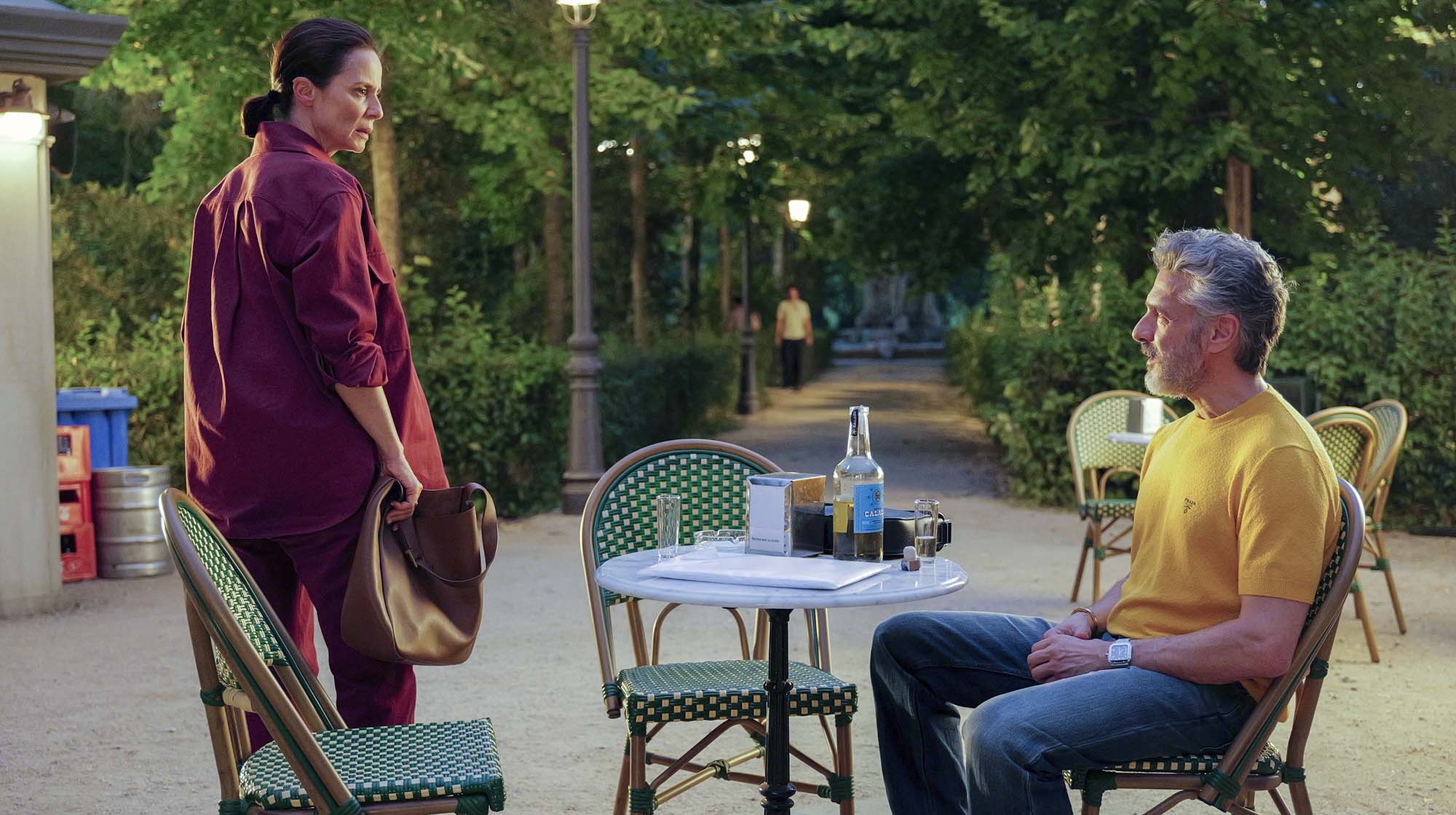
Although Almodóvar’s penchant for elaboration often resists the idea that less is more, this principle is distilled in the film’s masterful final sequence with Leonardo Sbaraglia and Aitana Sánchez-Gijón, both outstanding. It is a dialogue on the moral limits of fiction that ultimately gives meaning to the film’s otherwise uneven structure, leading to the open ending of a cinematic puzzle that, at times, risks losing our attention. That closing moment recalls Umberto Eco’s concept of the open work, particularly fitting in this year marking the tenth anniversary of his passing.
This extended sequence, in itself, is Bitter Christmas. One could argue that the film resembles an expanded short, filled with parentheses and annotations, framed by an excellent production (casting, music, art direction) in service of a wavering narrative that does not move us as deeply as some of Almodóvar’s earlier works, yet develops a distinctly philosophical discourse. Here, Almodóvar reflects on the educational function of art, echoing the empathy proposed by Martha Nussbaum or the ethical quality of fiction articulated by Wayne C. Booth. Both philosophical currents seem to inhabit that final scene, whether consciously or not. Above all, however, Almodóvar turns a fierce critical gaze upon himself—something made possible through autofiction—imbuing the film with a striking moral honesty about the creative process.



No one has posted any comments yet. Be the first person!