For decades, we accepted, with hardly any resistance, the figure of the art curator as a necessary intermediary between the work and the spectator. A kind of secular priest, situated in an ambiguous territory between academia, cultural mediation, and institutional management, charged with endowing with meaning that which, paradoxically, already possesses its own internal system of signification. Today, that figure has eroded; its function has become opaque, its authority rests more on rituals than on competencies, and its presence introduces an unnecessary distance between creation and experience. What were once mediators have become managers with hermeneutic aspirations.
What was once a simulacrum of intellectual exercise has turned into a diffuse profession whose recognition is often greater than that of the artists themselves. An anomaly that reveals a system in which cultural hierarchy has become more important than the creative act.
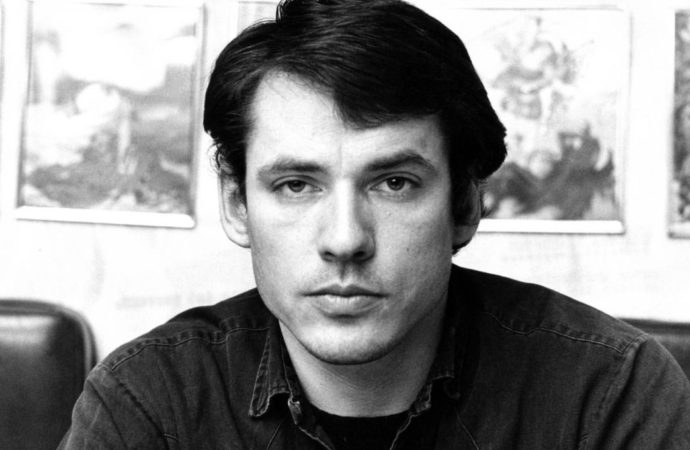
We are not speaking solely of a contemporary problem. Juan Antonio Ramírez pointed this out, with surgical precision, in Ecosistema y explosión de las artes, in which he analyzes the agents that shape the art world and how aesthetic values are constructed within changing social contexts. Culture had created a structure of intermediaries whose mission was no longer to facilitate access, but to legitimize, administer, and guard an invented sacrality. He forcefully showed how this bureaucratic architecture produced precarity, because economic flow benefited those who organized rather than those who created.
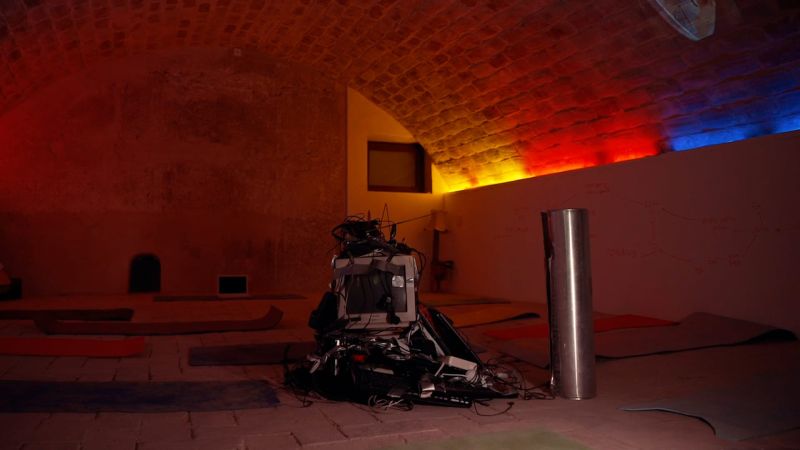
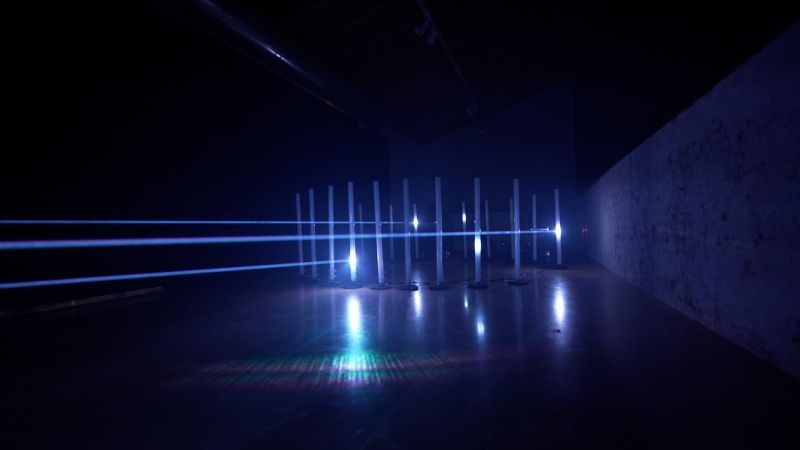
Tele kósmica -Technological Disobedience (DIE PISTOLE). Photo: Studio Coconut.
The curator, turned into a key figure of official culture, operated within a circuit in which works were pretexts to keep standing a system that needed to justify itself. Juan Antonio Ramírez foresaw before anyone else the obsolescence of that machinery. The curatorial structure has not known how to respond or adapt to the rhythm of the present—and the present waits for no one: neither artificial intelligence, nor distributed creation, nor platforms that dissolve the need for a mandatory interpretive filter. Artificial intelligence not only generates images, texts, or worlds; it is beginning to produce environments that reorganize aesthetic experience without asking anyone’s permission.
The new ecology of artificial thought opens a horizon in which creation ceases to be an exclusively anthropocentric act, where artificial intelligence does not replace the artist—for now—but does multiply their possibilities and reduce dependence on interposed cultural structures. In such a scenario, the figure of the curator does not disappear because someone suppresses it; it simply loses centrality, as post-curatorial forms emerge in which criteria are not imposed vertically but arise from interaction among humans, creative machines, and expanded spaces of experimentation.
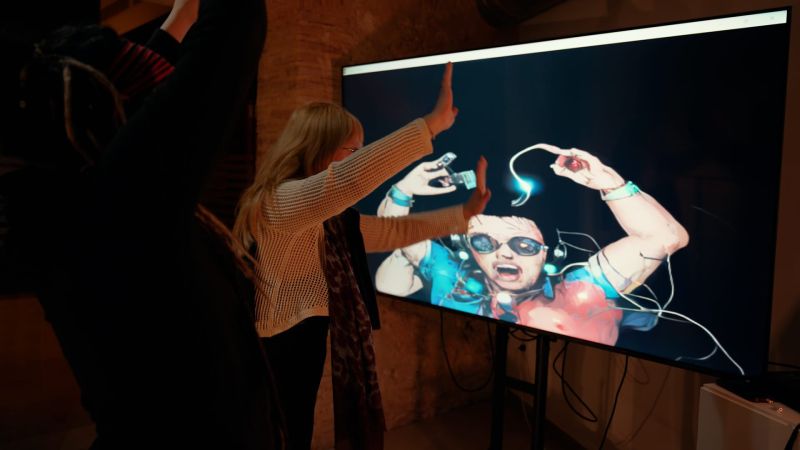
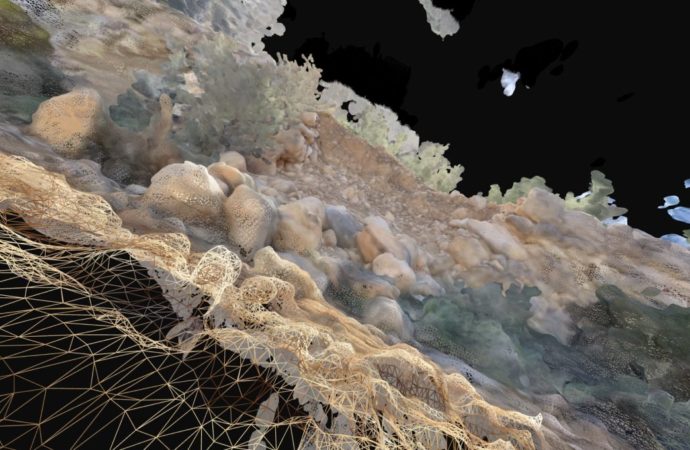
Colab.sos (Marina Barruer) Photo: Studio Coconut.
Art and Entertainment
Further intensifying this transformation, digital technology has colonized leisure in a way that has completely overflowed the traditional boundaries of art. Immersive entertainment centers, mapping spectacles, light tunnels, itinerant sensory events have become the dominant aesthetic of free time. Their logic is clear: immediate intensity, continuous stimulus, fascination without alternative. Faced with this luminous and emotional saturation, contemporary art has lost ground, pushed aside by proposals that offer instant gratification that it never wanted or knew how to offer. But the crucial issue here is not that entertainment has displaced art, but that it has occupied spaces that institutional culture abandoned in an exercise of self-complacency.
Those who were once mediators have become managers with hermeneutic aspirations.
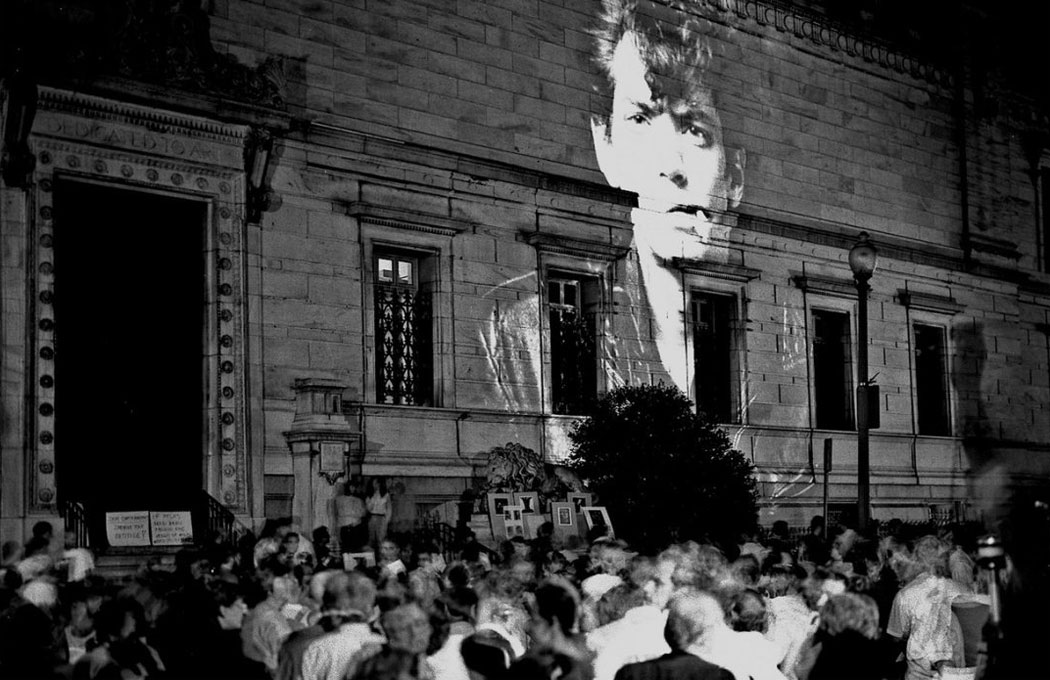
Nevertheless, the limitless proliferation of projections on historic façades, cathedrals turned into screens of dazzling effects, light spectacles that cover plazas, museums, and monuments as if everything were a surface available for instant ornamentation, is not a sign of cultural vitality but of creative fatigue. The excess of stimuli, the constant repetition of the same pulsating and strident aesthetic, the total lack of poetics generate an exhaustion that the public begins to feel, even if it cannot name it. These are experiences empty of memory, without conceptual density, where technique becomes pure artifice. However, these practices are not condemned to emptiness; they can be transformed if their spectacular logic is deprogrammed. It is not about renouncing technology—that would be absurd—but about turning it into an expressive tool rather than a machinery of effects.
A mapping can be art if it listens to the building instead of covering it, if it works with shadow and not only with light, if it composes slow times, if it recovers narrativity or abstraction instead of visual euphoria. An immersive space can generate a genuine aesthetic experience if it renounces sensory saturation and allows the gaze to find its own rhythm. Technology can become language again if it accepts that silence is also part of the work, that absence is as powerful as presence, that not all audiences need to be constantly assaulted. To de-spectacularize does not mean to impoverish, but to liberate the poetics of these tools. And here an inevitable question arises: can art, creativity, and entertainment coexist without one devouring the other? The answer is affirmative, but not automatic.
This coexistence demands a profound reconfiguration. Entertainment has much to offer—accessibility, rhythm, forms of emotional engagement that institutional culture has scorned for too long. Art also has something indispensable to contribute—density, critical reading, sensitivity to contexts, memory, ethics—and creativity operates as the tissue that allows both to evolve without being confused. The possible future does not lie in keeping them separated as opposing territories, but in allowing them to contaminate one another with precision. Entertainment can serve as a gateway to more complex experiences, and art can learn not to renounce being enjoyable without sacrificing its own ontological meaning.
The true gesture of rupture is not to destroy, but to leave behind what no longer serves and keep creating.
Coexistence requires a fundamental condition: that technology not be the center; on the contrary, it must be the operative space where these three forces meet, not the authority that dictates format or aesthetics. When technique occupies the place of purpose, art lies in a state of suspension. When technique is placed at the service of a gaze, of a sensitivity, of a creative gesture that assumes its aesthetic responsibility, then a territory emerges where boundaries become permeable. It is not about using light to distract, but to reveal; not about flooding the spectator, but about allowing them to enter; not about imposing a spectacle, but about constructing a sensitive situation where something can occur—not easy brilliance, but shared complexity.
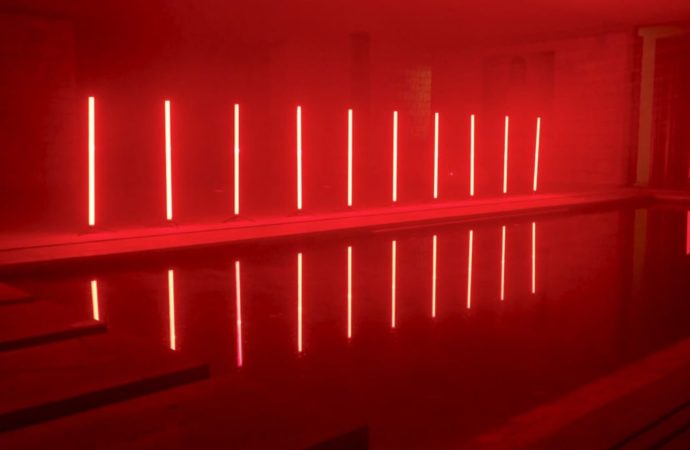
Instalación Sinapsis (TarsLab). Foto: Studio Coconut.
An Art in Which the Audience Interprets Without Tutelage
Digital art, generative artificial intelligence, sensory immersion, luminous cartography, the languages of contemporary leisure can coexist with art if something that seemed lost is reclaimed: the responsibility to create meaning. And in this new scenario, the hierarchical, institutional, legitimizing figure of the curator is no longer necessary. What is coming is a landscape in which authorship is distributed, in which tools think, in which the public interprets without tutelage, in which mediation adopts more open, more horizontal, and more experimental forms. A landscape where art does not need guardians, but sensitive architects capable of constructing experiences with awareness. A landscape where entertainment does not aspire to be art, but can be a point of departure. A landscape where creativity once again becomes a transformative force and not a mere ornament.
We may be facing a historic opportunity: to free art from the heavy infrastructure that kept it static and allow it to inhabit a present that moves at the speed of artificial thought—but in this passage it needs, more than ever, the depth of human sensitivity. That is the true gesture of rupture: not to destroy anything, but to leave behind what no longer serves and to keep creating.
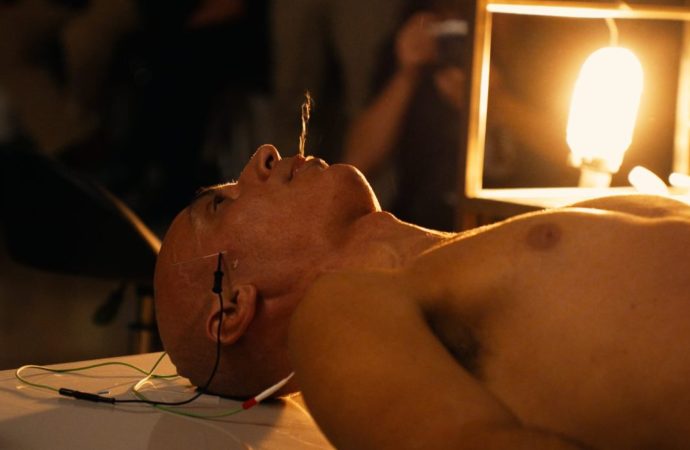
Header photo: Álvaro Terrones’ performance Frankenstein o el hombre obsoleto. Photo: Studio Coconut.
No one has posted any comments yet. Be the first person!
Estamos utilizando cookies para darle la mejor experiencia en nuestro sitio web. Puede encontrar más información sobre qué cookies estamos utilizando o desactivarlas en configuración.



No one has posted any comments yet. Be the first person!