
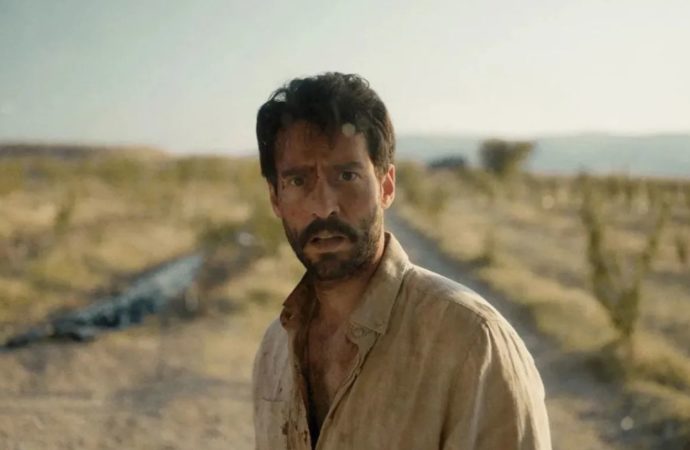


The story centres on Ali (Ekin Koç), a university professor who returns to Turkey after fourteen years in the United States —years he describes as a flight from fear. The origins of that fear lie within his family: a despotic father and an oppressed mother shaped his childhood, and their shadows continue to disturb his adult life. His anxieties are reignited when his mother dies under suspicious circumstances. Convinced that his father is responsible, Ali begins an investigation that leads him deep into the corridors of his own soul, forcing him to confront layers of generational trauma. Memories of his mother being beaten, locked away, and silenced haunt him and push him toward action. Yet the inner force driving him is double-edged: Ali comes from a society that silently accepts male dominance and nourishes a style of masculinity rooted not in care and wisdom, but in aggression and violence.
If there is a dark and hostile power, laying its treacherous toils within us, by which it holds us fast and draws us along the path of peril and destruction, which we should not otherwise have trod; if, Isay there is such a power, it must form itself inside us and out of ourselves, indeed; it must become identical with ourselves ― E.T.A. Hoffmann, Der Sandmann
These psychological frameworks are triggered even further when Ali learns he is infertile —a painful challenge for any man in a traditional society. Eventually, a mysterious doppelgänger begins to overtake Ali’s life and enact revenge. As the plot unfolds, we witness Ali gradually surrender to this shadow self, a figure who embraces patriarchal narratives and acts upon them willingly. Will Ali accept —and forgive— the mistreatment and murder of his mother? And will he, in turn, become the same kind of husband his father once was?
Domestic violence remains a major threat to women worldwide. According to the WHO, progress is painfully slow: intimate partner violence has decreased by only 0.2% per year over the past two decades. The home is still one of the most dangerous places for women, and only about 55% of countries have comprehensive legislation addressing domestic abuse. Statistics remain elusive, as many cases go unreported. The Things You Kill engages with these realities through an elegant yet unsettling linguistic metaphor. In one scene, Ali explains that in Arabic, a single word root can generate multiple meanings, including the verbs to translate and to kill. Is this duality a trap—or an opportunity? As Ali attempts to build a new life, can he kill the destructive patterns of the past, or will they be translated into his present, extinguishing any hope of a reborn humanity?
The director offers no clear answers, but instead provides a powerful impulse for reflection—and that, perhaps, is the greatest impact cinema can have.





Nadie ha publicado ningún comentario aún. ¡Se tú la primera persona!